
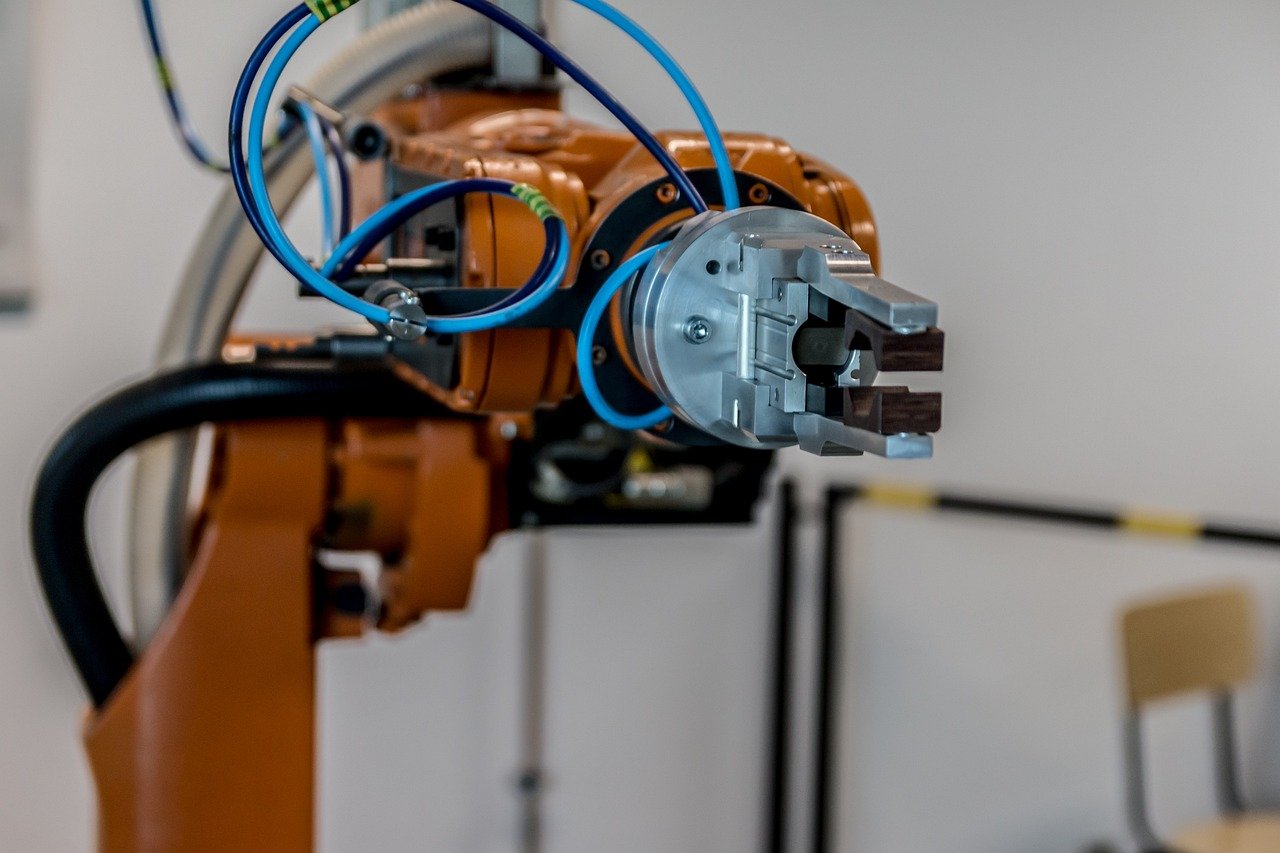
1X vs. Tesla: Whose World Model Will Teach Robots Faster?
While Tesla Optimus learns from human demonstrations, 1X's new world model takes a radically different approach: letting robots teach themselves by watching. This fundamental difference in training philosophy could determine which humanoid platform masters real-world tasks first.
In the race to create useful humanoid robots, a quiet but critical battle is unfolding not in hardware labs, but in the simulated worlds where AI brains are trained. 1X Technologies, the Norwegian company behind the NEO humanoid, just fired a major salvo with the release of its new "world model"—a foundational AI system designed to help robots understand and learn from their environment autonomously. This move directly challenges the dominant paradigm, exemplified by Tesla's Optimus, which relies heavily on human teleoperation and imitation learning. The core question is no longer just about dexterous hands or stable walking, but about which learning architecture will enable robots to adapt to our messy, unpredictable world.
What 1X's World Model Actually Does
At its heart, a world model is an AI system that builds an internal, predictive understanding of how the world works. For a robot, this means learning that if it pushes a cup, the cup will slide; if it drops a ball, the ball will bounce. 1X's model, trained on vast amounts of video and sensor data, aims to give its NEO robot a form of common-sense physics and intuition. Unlike traditional robotics programming, where every action is painstakingly coded, or imitation learning, where robots copy human movements, this approach allows the robot to hypothesize, simulate outcomes in its "mind," and then test actions in the real world. It's a step toward what researchers call "embodied AI"—intelligence that learns by doing and interacting.
The Core Comparison: Self-Teaching vs. Human-Guided Learning
The divergence between 1X and leaders like Tesla is stark. Tesla's approach for Optimus, as demonstrated, involves "AI training through human teleoperation." Humans wear motion-capture suits and perform tasks, and the robot's neural networks learn to replicate those precise movements. It's effective for teaching specific, repeatable tasks in controlled environments.
1X is betting on a more scalable, if more ambitious, path. Their world model is designed for what's known as reinforcement learning in a latent space. In simpler terms, the robot can watch a video of a task (like wiping a table), use its world model to understand the objects, forces, and goals involved, and then practice and refine the task through trial and error—largely on its own. The promise is a robot that doesn't need a human to demonstrate every single chore in every possible kitchen; it can generalize principles and adapt.
Why This Technical Distinction Matters for the Future
The implications are profound for commercialization and capability. A robot trained primarily on human demonstration may struggle with novelty—a differently shaped dish, an obstructed counter, a new type of spill. Its knowledge is largely a collection of recorded actions. A robot with a robust internal world model, in theory, could reason about the new scenario. It could infer that a cloth is for wiping, that liquid should be contained, and that a circular motion applies force to clean, then compose a new action sequence to handle the unfamiliar mess.
This gets to the holy grail of robotics: generalization. Factories can afford single-purpose machines. Our homes and workplaces require generalists. 1X's release signals a belief that the key to a general-purpose robot isn't just a versatile body, but a mind that can build its own understanding of physics, objects, and cause-and-effect from observation.
The Trade-Offs and the Road Ahead
This approach is not without significant hurdles. Training a powerful, accurate world model requires immense computational resources and data. The "trial and error" phase in the real world could be slow, inefficient, and potentially damaging. Tesla's method offers more immediate, reliable control and safety, as humans are directly in the loop for training critical tasks.
The next 12-18 months will be a testing ground for these philosophies. The metric to watch won't just be how many tasks a robot can perform, but how quickly it can learn a new task with minimal human intervention. Can 1X's NEO, armed with its new world model, watch a short tutorial video on assembling flat-pack furniture and then successfully do it? Can Optimus leverage its fleet learning from thousands of teleoperated sessions to achieve the same goal?
The Bottom Line for the AI Race
1X's world model release is more than a technical milestone; it's a declaration of strategy. While others refine imitation, 1X is investing in imagination—the robot's ability to model possible futures and learn from them. The winner of this foundational race won't necessarily be the company with the most human-like robot on stage today, but the one whose robots can wake up tomorrow and teach themselves to handle the tasks we haven't even thought of yet.
For investors, developers, and future users, the choice is becoming clear: Do you want a robot that learns like a meticulous apprentice, copying a master's every move? Or do you want a robot that learns like a curious child, exploring the world and building its own rules? The answer will define the next generation of automation.

Source and attribution
TechCrunch AI
Neo humanoid maker 1X releases world model to help bots learn what they see



Discussion
Add a comment