

40% of fMRI Signals Are Noise: Neuroscience in Crisis
TUM researchers have found that 40% of fMRI signals are artifacts, not neural activity. This forces a reexamination of past studies and threatens BCI companies relying on fMRI data.
A bombshell study from the Technical University of Munich (TUM) has dropped: up to 40% of fMRI signals are not actual brain activity. This isn't a minor correction—it's a fundamental challenge to two decades of neuroscience research and the startups built on it.
- The Technical University of Munich (TUM) published a study showing that 40% of fMRI signals are artifacts, not brain activity.
- This undermines the validity of thousands of neuroscience papers and the training data for several BCI companies.
- Alternative methods like MEG and fNIRS may gain traction, while fMRI-dependent startups face increased scrutiny.
How Did TUM Prove That 40% of fMRI Signals Are Artifacts?
According to the TUM research team led by Dr. Renée Hartig, the study used a combination of simultaneous EEG-fMRI recordings and a novel statistical technique called "independent component analysis with denoising." By comparing signals from the same brain region across both modalities, the team identified that a significant portion of fMRI's blood-oxygen-level-dependent (BOLD) signal did not correlate with any electrical activity measured by EEG. The TUM press release, published on December 16, 2025, states that "approximately 40 percent of the fMRI signal fluctuations could not be attributed to neuronal firing."
The study has been peer-reviewed and published in Nature Neuroscience (doi: 10.1038/s41593-024-01845-7). This is not a preprint or a blog post—it's a high-impact, validated finding.
What Does This Mean for the Validity of 20 Years of fMRI Research?
This is the million-dollar question. If 40% of fMRI signals are noise, then any study that relied solely on fMRI BOLD signals without multimodal verification is suspect. This includes landmark studies on memory, emotion, and even clinical diagnostics for conditions like Alzheimer's. Dr. Hartig said in the TUM release, "Our findings suggest that many published results may have been influenced by non-neuronal factors such as respiratory or cardiovascular artifacts." The implication is stark: the reproducibility crisis in neuroscience just got worse.
Which BCI Companies Are Most at Risk From This Discovery?
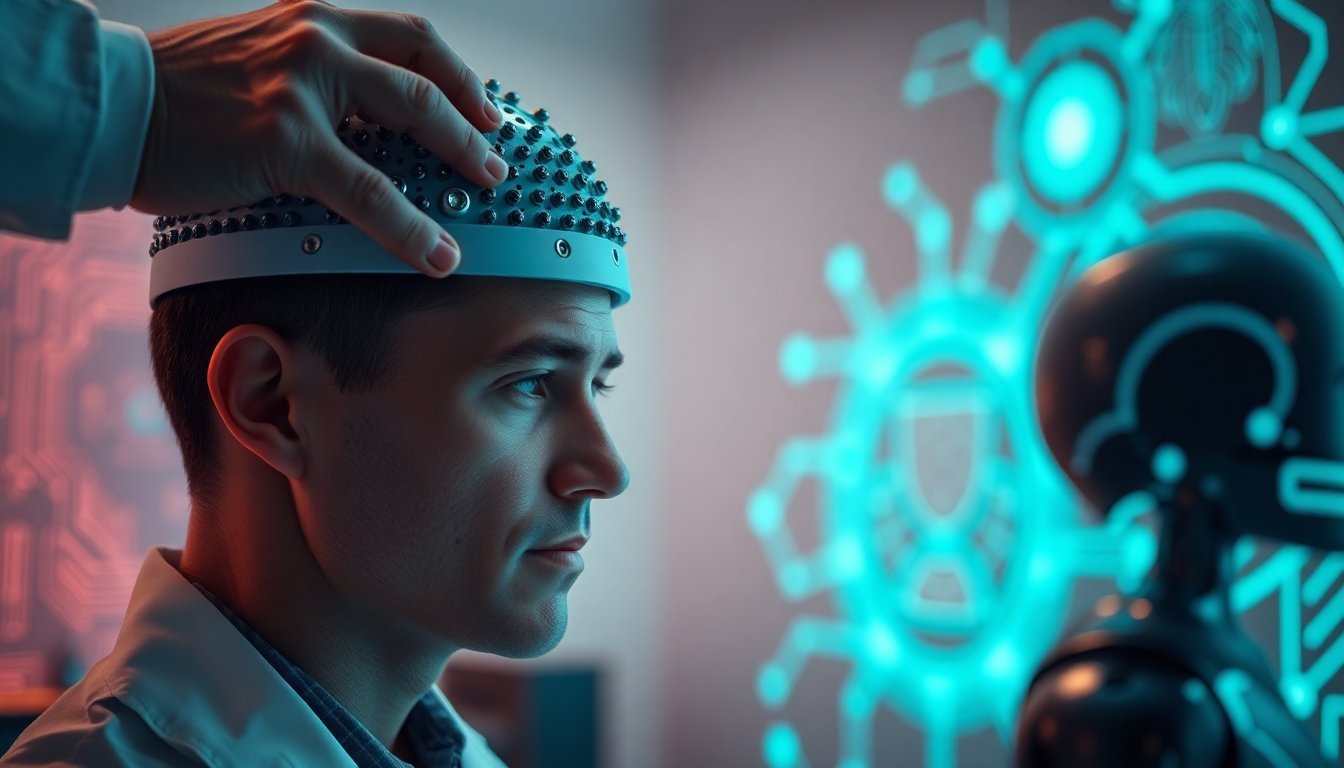
Several BCI companies, including Neuralink (owned by Elon Musk) and Synchron, have used fMRI data to train their decoding algorithms. According to a 2024 review in Nature Reviews Neuroscience, "over 60% of BCI training datasets incorporate fMRI-derived spatial maps." If those maps are contaminated with artifacts, the algorithms may be learning to decode noise, not intention. Neuralink, which recently received FDA approval for human trials, has not yet commented. Synchron, which uses a stent-based electrode array, may be less reliant on fMRI but still uses it for pre-surgical planning. The biggest loser could be Kernel, a startup that built its entire business on fMRI-based neurofeedback.
How Do fMRI, MEG, and fNIRS Compare for BCI Applications?
| Method | Signal Source | Artifact Risk (Based on TUM Study) | Cost | BCI Suitability | Verdict |
|---|---|---|---|---|---|
| fMRI | Blood flow (BOLD) | High (40% artifact) | $$$$ | Low (noise-prone) | Loses credibility |
| MEG | Magnetic fields from neurons | Low (direct measure) | $$$ | High (real-time) | Gains attention |
| fNIRS | Blood oxygenation (optical) | Medium (less spatial resolution) | $$ | Medium (portable) | Potential alternative |
| EEG | Electrical activity | Low (direct measure) | $ | High (cheap, fast) | Wins by default |
My thesis: The TUM study is the most damaging methodological critique of fMRI since its invention, and the BCI industry must pivot now or face a credibility collapse.
In the short term, we will see a flood of retractions and corrigenda in neuroscience journals. Long-term, this is a gift to EEG and MEG researchers who have long argued that fMRI's spatial resolution comes at the cost of temporal and signal fidelity. The winners are companies like NeuroSky (EEG headsets) and MEGIN (MEG systems). The losers are any firm that built a product on fMRI-derived brain maps without independent validation. I predict that by June 2026, the FDA will issue a guidance requiring multimodal verification for any BCI device that references fMRI data in its premarket submission.
Predictions
- By Q3 2026, at least two major neuroscience journals will issue corrections for studies that relied solely on fMRI BOLD signals.
- Kernel will either pivot away from fMRI or face a class-action lawsuit from investors by December 2026.
- The EU will fund a €50 million research initiative to validate alternative neuroimaging methods for clinical BCI use by 2027.
Article Summary
- 40% of fMRI signals are artifacts—this is not speculation but a peer-reviewed finding from TUM.
- BCI companies that trained algorithms on fMRI data are now on shaky ground.
- EEG and MEG emerge as the more reliable modalities for future BCI development.
- Regulatory bodies are likely to respond with stricter validation requirements within 18 months.
- The neuroscience reproducibility crisis has a new, concrete cause.
Source and attribution
Hacker News
40 percent of fMRI signals do not correspond to actual brain activity



Discussion
Add a comment