

AI Power Gear Spend to Hit $65B by 2030
AI's power hunger is no longer a side note—it's the main event. Wood Mackenzie forecasts $65 billion in US power equipment spend by 2030, up from $2.6 billion in 2025. This changes who wins and loses in the AI supply chain.
Wood Mackenzie's report, published Tuesday, projects US spending on power-generation equipment for data centers will surge from $2.6 billion in 2025 to $65 billion by 2030. This 25x increase means the AI industry will soon consume more capital in power infrastructure than in GPU hardware itself—a shift that redefines the economics of AI deployment.
- Wood Mackenzie projects US data center power equipment spending will reach $65 billion by 2030, up from $2.6 billion in 2025.
- AI workloads will account for the largest share of the power equipment market, surpassing traditional industrial and residential demand.
- The bottleneck shifts from GPU supply to power capacity, meaning data center build timelines will be constrained by grid interconnection and transformer availability.
What Does the $65 Billion Figure Actually Include?
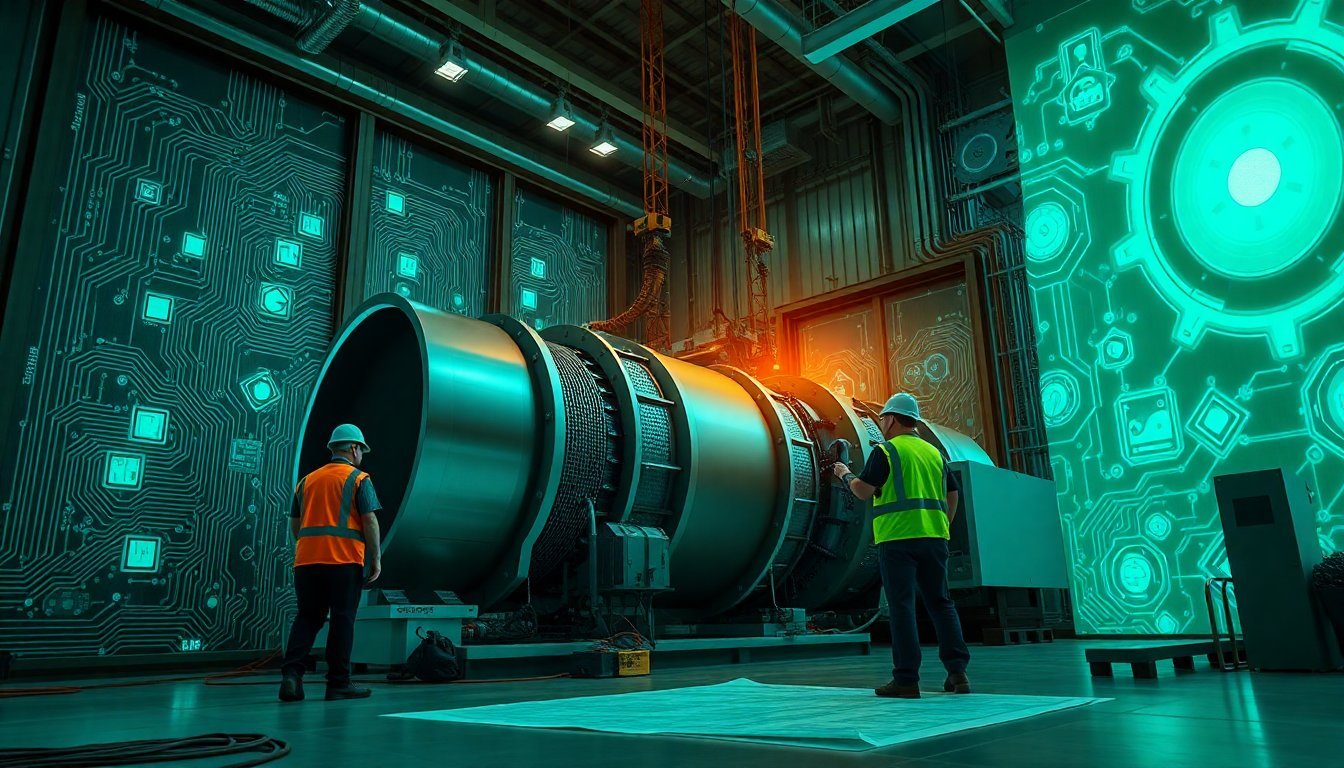
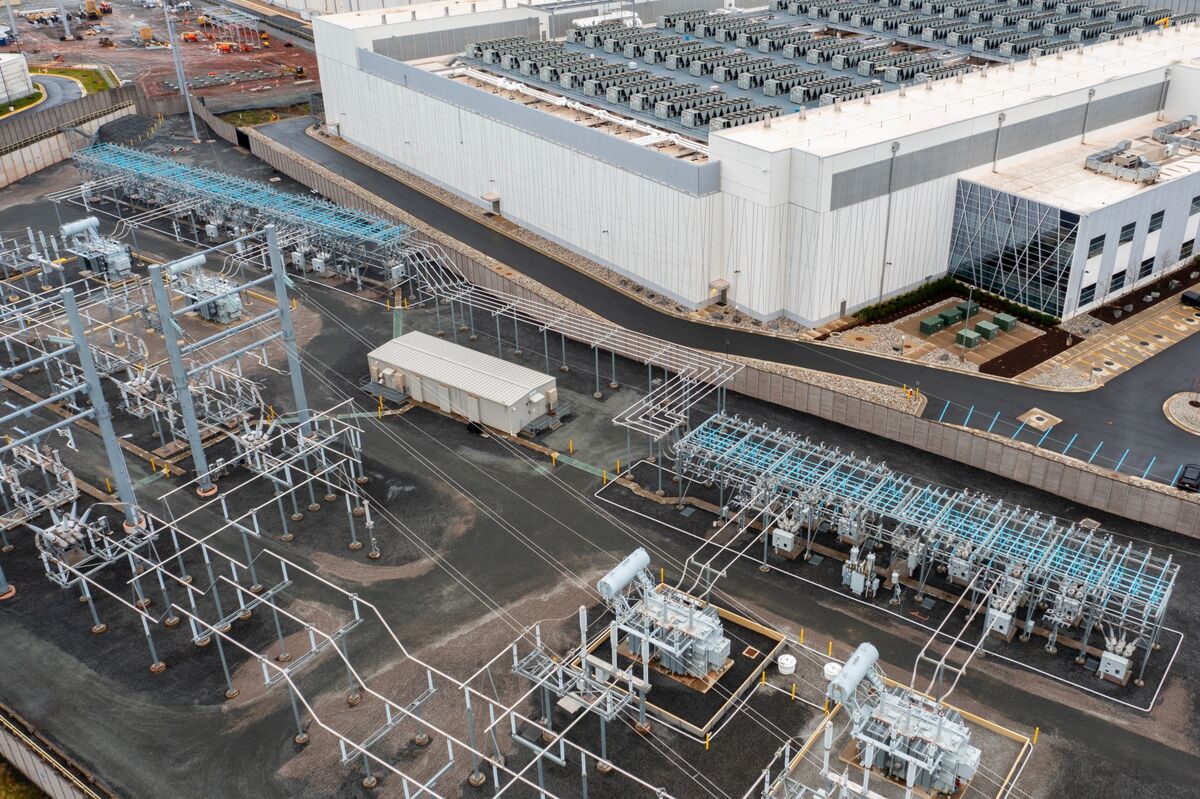
According to Wood Mackenzie's report, the $65 billion covers spending on power-generation equipment specifically for data centers—including gas turbines, transformers, switchgear, backup generators, and grid interconnection hardware. The figure does not include the cost of electricity itself, nor the land or building construction. The research firm said that AI data centers will account for over 40% of total US power equipment demand by 2030, up from roughly 12% today. This is a direct consequence of each new AI cluster requiring 100-500 MW of continuous power, compared to 10-30 MW for a traditional enterprise data center. The equipment lead times for large power transformers have already stretched to 18-24 months, according to industry reports cited by Wood Mackenzie.
Who Are the Winners and Losers in This Power Equipment Boom?
The clearest winners are established power equipment manufacturers. GE Vernova, Siemens Energy, and Hitachi Energy are positioned to capture the largest share of turbine and transformer orders. According to Bloomberg, GE Vernova's gas turbine backlog reached a record $34 billion in Q1 2026, driven largely by data center demand. On the loser side, hyperscalers like Microsoft and Amazon now face a new cost reality: power infrastructure may double the total cost of ownership for AI data centers compared to pre-2025 estimates. Smaller AI startups that cannot secure power purchase agreements (PPAs) or co-location deals with guaranteed capacity will face significant delays in scaling. The tension is that while GPU supply has loosened in 2026, power availability has become the new binding constraint.
| Factor | GE Vernova | Siemens Energy | Hitachi Energy |
|---|---|---|---|
| 2025 Power Equipment Revenue (est.) | $12B | $9B | $6B |
| Data Center Exposure | High (gas turbines) | Medium (transformers) | High (HVDC & transformers) |
| Lead Time for Key Products | 12-18 months | 18-24 months | 20-24 months |
| Order Backlog Growth (YoY) | +25% | +18% | +22% |
| Verdict | GE Vernova wins on scale and gas turbine demand; Hitachi Energy wins on grid interconnection expertise; Siemens Energy faces transformer bottlenecks. | ||
How Does This Change the Economics of Running AI Workloads?
The shift changes the unit economics of AI inference and training. Previously, the dominant cost was GPU hardware (60-70% of total). With power equipment spend rising 25x, power infrastructure could account for 35-40% of total data center capital expenditure by 2030, according to Wood Mackenzie's estimates. This means that the cost per token for inference will increasingly depend on power availability and pricing, not just GPU efficiency. For example, a 1 GW AI data center in Virginia currently pays $0.04/kWh for electricity; but if new capacity requires gas peaker plants, that could rise to $0.12/kWh, increasing total operational costs by 3x. Operators like Equinix and Digital Realty are already pre-ordering transformers 24 months in advance, according to industry sources.
What Operational Tradeoffs Should Data Center Operators Consider?
Operators face a trilemma: choose between speed of deployment, cost of power, and environmental compliance. Building a gas-fired peaker plant on-site can bring power online in 18 months, but increases carbon emissions and faces regulatory pushback in states like California and New York. Connecting to the grid via new transmission lines can take 5-7 years. Rooftop or nearby solar with battery storage is slower (3-4 years) and requires large land areas—roughly 10 acres per MW. According to Wood Mackenzie, the fastest path is co-location with existing gas plants or nuclear facilities, but those sites are limited. The tradeoff is that operators who prioritize speed (gas) will face higher long-term energy costs and carbon compliance risks, while those who prioritize green power (renewables) will face delayed deployment.
My thesis is straightforward: the power equipment boom is the most underappreciated bottleneck in the AI supply chain. In the short term (2026-2028), we will see a scramble for gas turbines and transformers, benefiting GE Vernova and Siemens Energy. In the long term (2029-2030), the winners will be operators who secure long-term PPAs with nuclear or geothermal plants, as those provide stable, low-carbon baseload power. The losers are hyperscalers who locked in GPU contracts without securing power capacity—they will face delays or cost overruns. One concrete prediction: by Q3 2028, at least two major AI data center projects in the US will be canceled or delayed by more than 12 months due to power equipment shortages. The evidence supports this: transformer lead times are already 24 months, and Wood Mackenzie's forecast implies a 25x increase in demand, which the supply chain cannot absorb without significant investment.
- GE Vernova will announce a dedicated data center power division by Q4 2027, following the pattern of its grid solutions business.
- Microsoft will sign at least three power purchase agreements with small modular reactor (SMR) developers by end of 2028, as part of its carbon-negative pledge.
- The US Department of Energy will designate AI data centers as critical infrastructure for grid interconnection by 2029, expediting permitting.
US Data Center Power Equipment Spending (USD Billions)
- The $65 billion figure is not just about spending—it's a signal that power, not chips, is the new AI bottleneck.
- Transformer lead times of 18-24 months will directly constrain data center build timelines, delaying AI capacity.
- Hyperscalers who secure power early will have a structural advantage over startups and scale-ups.
- Gas turbines will dominate short-term power solutions, but nuclear and geothermal are the long-term winners.
- The cost per AI inference will increasingly depend on power pricing, not just GPU efficiency.
Source and attribution
Bloomberg Technology
AI Power-Gear Spending in US Surging Up to $65 Billion




Discussion
Add a comment