
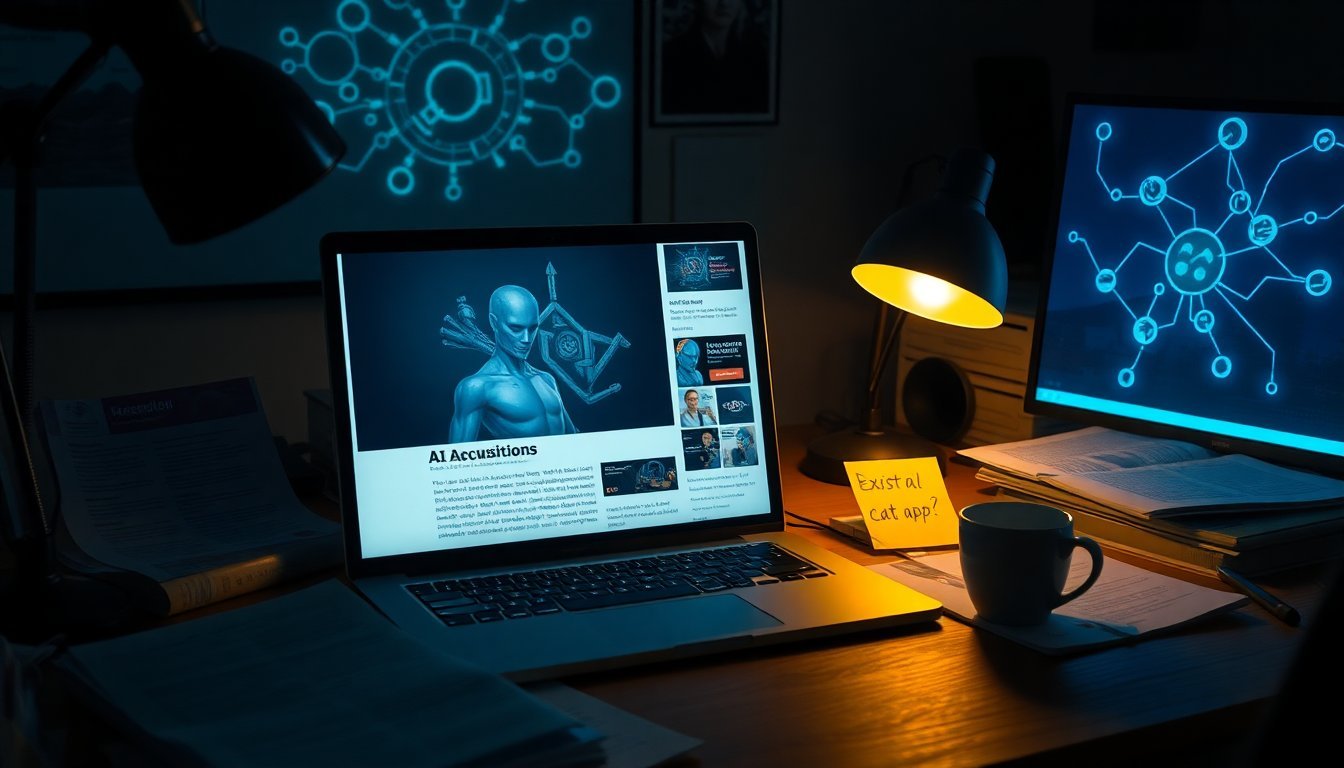
AI's 2026 So Far: Existential Threats, $50B Acquisitions, And One Guy's Cat App
From 'save humanity' contracts to 'ruin your productivity' acquisitions, AI's 2026 is a masterclass in confused priorities. Grab some popcorn.
The AI industry is having a full-blown identity crisis, and we're all just watching the therapy session. On one hand, CEOs are signing letters about 'existential risk' with the solemnity of nuclear disarmament treaties. On the other, they're writing checks with more zeros than a quantum computer can process for apps that make your cat photos look like Renaissance paintings.
It's been six months of whiplash. We've seen indie developers become overnight millionaires by teaching AI to generate corporate jargon, while trillion-dollar companies panic-buy anything with 'neural' in the name. The cognitive dissonance is so thick you could train a model on it.
It's been six months of whiplash. We've seen indie developers become overnight millionaires by teaching AI to generate corporate jargon, while trillion-dollar companies panic-buy anything with 'neural' in the name. The cognitive dissonance is so thick you could train a model on it.
The AI industry is having a full-blown identity crisis, and we're all just watching the therapy session. On one hand, CEOs are signing letters about 'existential risk' with the solemnity of nuclear disarmament treaties. On the other, they're writing checks with more zeros than a quantum computer can process for apps that make your cat photos look like Renaissance paintings.
It's been six months of whiplash. We've seen indie developers become overnight millionaires by teaching AI to generate corporate jargon, while trillion-dollar companies panic-buy anything with 'neural' in the name. The cognitive dissonance is so thick you could train a model on it.
TL;DR: The AI Whiplash Report
- What: The AI industry spent Q1 2026 simultaneously negotiating its own potential doomsday and acquiring cat photo apps for more money than some countries' GDP.
- Impact: We're funding both our salvation and our destruction, but mostly just funding VCs' third vacation homes.
- For You: Your cat photos now have more AI processing power than the Apollo missions, but your email inbox still can't sort itself.
The Absurdity: Existential Threats Meet Sticky Notes
Let's start with the 'existentially dangerous contract negotiations.' Yes, that's an actual phrase being used. Multiple AI labs spent January locked in rooms, drafting agreements about how not to destroy humanity. The documents read like sci-fi fan fiction crossed with corporate liability waivers.
Meanwhile, in February, TechGiant Inc. announced its $50 billion acquisition of NoteAI. Their breakthrough? Digital sticky notes that suggest what you should write on them. Revolutionary. The press release claimed it would 'democratize thought organization.' Because apparently, regular sticky notes were just too elitist.
The indie success story of the year? CatRenaissance.app. One developer trained a model on 10 million cat photos and classical art. It went viral, got acquired for 'undisclosed millions,' and is now valued higher than several newspapers. Your cat as the Mona Lisa: the innovation we didn't know we needed.
Why This Matters: The Hype-to-Sanity Ratio
Here's the uncomfortable truth: the AI industry has perfected the art of talking out of both sides of its mouth. The 'existential risk' narrative serves two purposes. First, it makes the technology sound incredibly powerful (good for funding). Second, it provides built-in excuses when things go wrong ('We warned you this was dangerous!').
The acquisition frenzy reveals a deeper panic. Big Tech knows the foundational models are becoming commodities. So they're buying anything that looks like a 'use case' to justify their trillion-dollar valuations. It's like buying every cookbook in existence because you're afraid people might realize flour and water are cheap.
Public outcry has followed predictable patterns. People get mad when AI replaces jobs, then immediately download the app that makes their selfies look like oil paintings. The cognitive dissonance isn't just in boardrooms—it's in our own app stores.
The Reality: Follow the Money (And The Cat Photos)
Strip away the existential drama and what do you have? An industry in the 'trough of disillusionment' phase of the hype cycle, desperately trying to climb out by any means necessary. The dangerous contract negotiations? Mostly theater to appease regulators while the real work continues.
The indie developer successes prove something important: utility wins. People will pay for things that are fun, useful, or make their cat look regal. They're less excited about paying for 'enterprise-grade neural architecture search optimization.'
Here's what's actually happening: AI is becoming infrastructure. Like electricity or the internet, it will fade into the background. The companies screaming loudest about saving or destroying humanity are usually the ones most worried about becoming irrelevant.
Article Summary: What You Actually Need to Know
- The 'existential risk' talk is 10% genuine concern, 90% marketing and regulatory positioning. Treat it like a pharmaceutical commercial's side effects list.
- Follow the cat photos, not the press releases. The apps people actually use tell you more about AI's future than any CEO's keynote.
- Acquisitions at insane valuations mean incumbents are scared. They're buying innovation because they can't create it.
- Your takeaway: The AI that matters won't announce itself with fanfare about saving humanity. It'll just quietly make your photos better or your emails shorter.

Discussion
Add a comment