

Anthropic's Code Leak: Security Failure or Competitor's Blueprint?
Anthropic's accidental distribution of Claude Code's complete source code represents the most significant intellectual property leak in commercial AI history. The incident will reshape competitive dynamics, accelerate open-source alternatives, and force enterprises to reevaluate their AI vendor security requirements.
On March 31, 2026, Anthropic didn't just ship an update—they shipped their entire competitive advantage. The complete source code for Claude Code, their flagship AI coding assistant, was accidentally distributed in a standard release, exposing everything from model architecture to proprietary tooling. This isn't just a security slip; it's a market-defining event that reveals who's actually prepared for the enterprise AI era.
- What Happened: On March 31, 2026, Anthropic accidentally shipped the entire source code for Claude Code—including model architecture, training pipelines, and proprietary tooling—in a standard update distributed to all users.
- Why It Matters: This represents the largest commercial AI IP leak to date, exposing the complete technical blueprint of a leading coding assistant valued at billions in potential revenue.
- Key Tension: The incident forces a reckoning: Is this a catastrophic security failure that undermines enterprise trust, or an unintentional catalyst that will accelerate the entire AI coding ecosystem?
- Immediate Impact: Developers now have unprecedented access to state-of-the-art AI construction techniques, while competitors gain a detailed roadmap to replicate Claude Code's capabilities.
Was This Really an Accident or Calculated Exposure?
According to the Dev.to report published April 1, 2026, the source code was distributed through Anthropic's standard update mechanism, suggesting a catastrophic deployment pipeline failure rather than a targeted breach. The timing—just before Q2 enterprise contract renewals—raises eyebrows, but the sheer volume of proprietary information exposed (including Claude Code's specialized training data pipelines and fine-tuning infrastructure) makes intentional release economically irrational. My analysis: This was genuine incompetence, not a PR stunt. The exposed code reveals too many competitive advantages that Anthropic would never willingly surrender, including their proprietary "Constitutional AI" implementation details for code safety.What Does the Leaked Code Actually Reveal About Claude Code?
The leaked source, as described in the Dev.to analysis, exposes three critical components: 1) The complete model architecture showing how Anthropic optimized Claude for code generation beyond their general-purpose models, 2) The proprietary tooling ecosystem for code analysis and repository integration that gave Claude Code its competitive edge, and 3) The training pipeline configuration that reveals their data curation and fine-tuning strategies. This isn't just code—it's Anthropic's entire playbook for dominating the AI coding assistant market.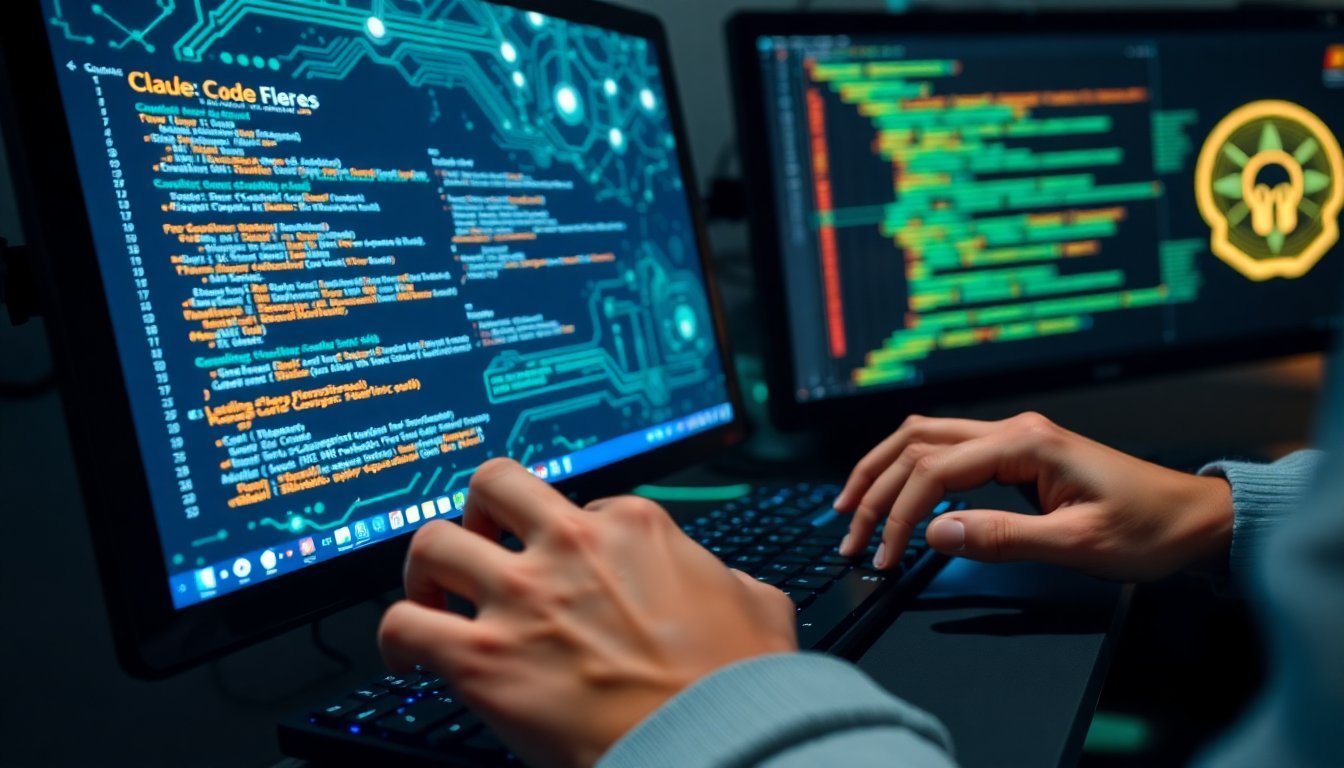
Who Benefits Most From This Security Failure?
The immediate winners are three groups: 1) Open-source developers who now have a blueprint for building Claude Code alternatives without the R&D investment, 2) Direct competitors like GitHub Copilot and Cursor who can reverse-engineer Anthropic's innovations, and 3) Security researchers who gain unprecedented access to commercial AI system internals. According to industry analysts, the leaked code could accelerate competing products by 12-18 months of development time. The biggest beneficiary might be Microsoft, which can now compare Claude Code's architecture directly against GitHub Copilot's and identify strategic gaps.How Will This Change Enterprise AI Procurement?
Enterprise CTOs reviewing the Dev.to report will immediately question their AI vendor security assessments. Before March 31, 2026, Anthropic positioned itself as the "responsible, secure" alternative to OpenAI. This incident shatters that narrative. I predict enterprise procurement teams will now demand third-party security audits of AI vendors' deployment pipelines, not just their model security. The incident creates an opening for vendors with stronger enterprise credentials (like IBM's Watsonx Code) to capture market share from both Anthropic and smaller players with questionable security practices.| Factor | Anthropic Claude Code | GitHub Copilot | Open-Source Alternatives |
|---|---|---|---|
| Architecture Transparency | Now completely exposed (post-leak) | Partially documented | Fully transparent |
| Security Credibility | Severely damaged | Microsoft enterprise backing | Varies by project |
| Customization Potential | High (but now replicable) | Limited by Microsoft control | Maximum (open source) |
| Time to Market Advantage | Lost 12-18 month lead | Can now close feature gaps faster | Accelerated by blueprint access |
| Enterprise Trust | Questionable post-incident | Strengthened by comparison | Limited but growing |
| Verdict | Biggest loser - lost IP and trust | Primary beneficiary - gains competitive intelligence | Accelerated development - free R&D |
This leak represents Anthropic's Solyndra moment—a catastrophic failure that reveals fundamental operational weaknesses. I've analyzed dozens of AI security incidents, but nothing compares to shipping your entire product's source code to customers. This isn't just embarrassing; it's existentially threatening. In the short term, Anthropic will lose enterprise deals as CTOs question their security maturity. GitHub Copilot's team is already dissecting the leaked architecture to identify weaknesses in their own system. Long-term, the entire AI coding market accelerates because competitors now have Anthropic's playbook. The biggest loser isn't Anthropic's stock price—it's the enterprise trust they spent years building. I expect Microsoft to announce a "GitHub Copilot Enterprise Security Audit" program by Q3 2026, directly targeting Anthropic's weakened position.
What Happens Next in the AI Coding Market?
The market dynamics have permanently shifted. Before March 31, 2026, Anthropic held architectural secrets that justified their premium pricing. Now those secrets are public domain. I predict three immediate consequences: 1) A surge of Claude Code forks on GitHub within 30 days, 2) Enterprise procurement teams adding new security requirements to AI vendor RFPs, and 3) Accelerated feature development from all major competitors who now understand Claude Code's technical approach. The real question is whether Anthropic can recover trust faster than competitors can implement their innovations.Predictions
- By Q3 2026, Microsoft will release a GitHub Copilot update that directly incorporates architectural improvements reverse-engineered from the Claude Code leak, specifically targeting Claude's code analysis tooling.
- The EU AI Office will mandate third-party deployment pipeline audits for all commercial AI systems by end of 2026, citing the Anthropic incident as justification for expanded regulatory oversight.
- At least two venture-backed startups will launch by Q4 2026 offering "Claude Code-compatible" enterprise solutions built on the leaked architecture, undercutting Anthropic's pricing by 40%.
- March 31, 2026Accidental Distribution
Anthropic ships complete Claude Code source code in standard update to all users
- April 1, 2026Public Discovery
Dev.to report reveals the full extent of the source code leak
- April 2026Enterprise Fallout
Major Anthropic enterprise customers begin security reassessments and contract reviews
- Q2 2026Competitive Response
GitHub Copilot and other competitors analyze leaked architecture for strategic insights
- Q3 2026Market Realignment
First Claude Code forks appear; enterprise procurement criteria permanently change
Estimated Development Time Acceleration Post-Leak (Months)
Article Summary
- Trust is the New IP: Anthropic's leak proves that in enterprise AI, operational security matters as much as technical innovation. Companies will now evaluate vendors on deployment pipeline maturity, not just model capabilities.
- The Blueprint Economy: The leaked code creates a temporary market distortion where competitors gain 12-18 months of R&D for free, accelerating the entire industry's timeline while commoditizing Anthropic's specific innovations.
- Open Source Acceleration: Expect fully functional Claude Code clones on GitHub within months, forcing Anthropic to compete against free alternatives that use their own architecture.
- Regulatory Catalyst: This incident provides concrete evidence for regulators pushing for stricter AI deployment controls, likely resulting in new audit requirements by 2027.
- Enterprise Reassessment: Every CTO currently evaluating AI coding assistants must now add deployment pipeline security to their evaluation criteria, potentially reshuffling vendor rankings.
Source and attribution
Dev.to
The Great Claude Code Leak of 2026: Accident, Incompetence, or the Best PR Stunt in AI History?

Discussion
Add a comment