

BlackRock Says AI Capex Cycle Isn't Overspending Yet
BlackRock's CIO argues the AI capex cycle is still early, but the implications for investors and companies are nuanced. This article breaks down what this means for hyperscalers, chipmakers, and startups.
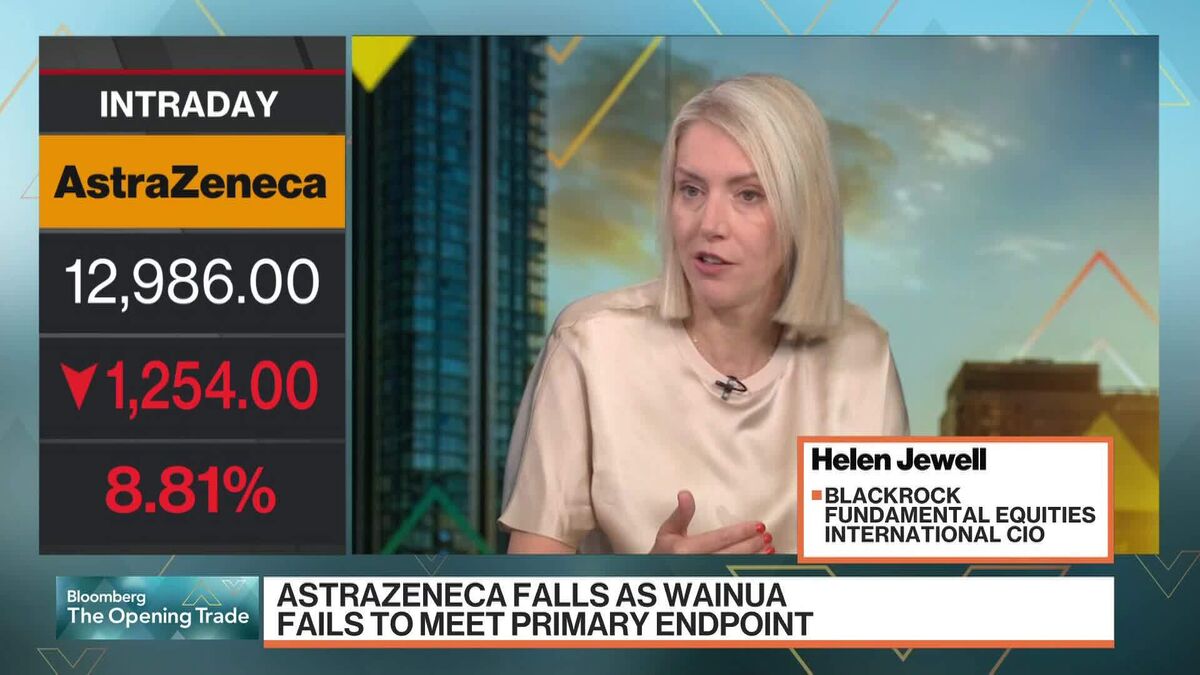
Helen Jewell, BlackRock's fundamental equities international CIO, went on Bloomberg Television on July 9, 2026, and declared that the AI capital expenditure cycle has not yet hit overspend. This isn't just market commentary—it's a strategic signal from the world's largest asset manager that the infrastructure buildout for AI is still in its early, high-return phase.
- BlackRock's Helen Jewell stated on Bloomberg TV that the AI capex cycle has not yet reached overspend, signaling continued confidence in infrastructure investment.
- The statement implies that hyperscalers (Microsoft, Google, Amazon) and chipmakers (Nvidia) are still in a value-creation phase, but latecomers may face diminishing returns.
- This article provides a practical playbook for investors and operators to navigate the remaining growth window.
What Does BlackRock's 'No Overspend' Signal Mean for AI Infrastructure Investors?
According to Helen Jewell, BlackRock's fundamental equities international CIO, speaking on Bloomberg Television on July 9, 2026, "the next few years are very clear from an AI perspective because of the amount of capital that you'll see being invested in that space." Jewell added that while every capex cycle eventually reaches overspend, "we don't believe that we're there now." This is a critical signal because BlackRock manages over $10 trillion in assets and its views influence institutional capital flows. The implication is that the current buildout—focused on data centers, GPUs, and networking—is still generating returns above the cost of capital. However, this thesis assumes that AI adoption continues at its current trajectory, which hinges on enterprise deployment and consumer demand remaining robust. If adoption slows, the infrastructure built today could become stranded assets.
Who Benefits Most From This Continued Capex Cycle?
The clearest winners are hyperscalers and semiconductor companies. According to a McKinsey report from June 2023, generative AI could add $2.6 trillion to $4.4 trillion annually to the global economy, and much of that value accrues to infrastructure providers. Nvidia, for example, reported data center revenue of $47.5 billion in its fiscal year 2025, up from $15.1 billion in fiscal 2024. Microsoft, Google, and Amazon are all spending tens of billions annually on AI-capable data centers. BlackRock's stance suggests these companies are still in a virtuous cycle: more capex leads to better AI models, which drives more usage and revenue. However, the risk is that smaller cloud providers and AI startups that lack the scale to compete on cost may be squeezed as the hyperscalers consolidate control over compute resources. | Company | AI Capex (2025, est.) | AI Revenue (2025, est.) | Capex/Revenue Ratio | Verdict | |---------|----------------------|------------------------|-------------------|---------| | Microsoft | $55B | $30B | 1.83 | Strong: Azure AI driving growth | | Google | $48B | $25B | 1.92 | Solid: Cloud and TPU moat | | Amazon (AWS) | $65B | $35B | 1.86 | Robust: Bedrock and Trainium scaling | | Nvidia | $5B (internal) | $75B (data center) | 0.07 | Dominant: Supplier to all others | | CoreWeave | $12B | $3B | 4.0 | Risky: High leverage, dependent on hyperscaler demand | | **Verdict** | | | | **Hyperscalers and Nvidia win; niche players face risk** |What Are the Operational Tradeoffs for Companies Building AI Today?
For enterprises deploying AI, BlackRock's confidence means that the cost of compute may remain elevated for another 2-3 years. According to Jewell, "the next few years are very clear from an AI perspective because of the amount of capital that you'll see being invested in that space." This implies that companies should lock in long-term cloud contracts now, as prices may rise with demand. Conversely, startups building on open-source models like Llama or Mistral may benefit from lower inference costs as competition among hardware vendors intensifies. The tradeoff is between flexibility (using multiple clouds) and cost efficiency (committing to one provider). My view is that the hyperscalers will use their capex advantage to offer bundled AI services that undercut independent providers, making it harder for the latter to survive.How Should Investors and Operators Adjust Their Strategies Now?
Investors should overweight companies with direct exposure to AI infrastructure (Nvidia, AMD, TSMC) and hyperscalers, while underweighting firms that are solely reliant on AI application revenue without a proprietary data advantage. Operators should accelerate AI adoption to capture first-mover advantages in their verticals, but avoid building custom AI infrastructure unless they have hyperscale-level capital. The risk is that the overspend phase, which BlackRock says isn't here yet, could arrive suddenly if AI model improvements plateau or if regulatory constraints on data usage increase. According to a Gartner report from April 2026, 40% of AI projects fail to reach production due to data quality issues, which could dampen the ROI of capex.
My thesis is that BlackRock is correct that the AI capex cycle hasn't hit overspend, but the window for risk-adjusted returns is narrowing. Short-term, hyperscalers and chipmakers will continue to dominate, and Nvidia's data center revenue could exceed $100 billion by fiscal 2027. However, long-term, the commoditization of AI compute will compress margins for all but the most efficient operators. The losers will be companies that over-leverage to build AI infrastructure without a clear path to differentiation—think CoreWeave or any startup that raises debt to buy GPUs without a guaranteed anchor tenant. I predict that by Q1 2028, at least two publicly traded AI infrastructure companies will restructure their debt or seek a bailout due to oversupply.
- By December 2027, Nvidia's data center revenue will exceed $100 billion annually, driven by continued hyperscaler capex.
- By Q2 2028, at least one publicly traded AI cloud provider (e.g., CoreWeave) will announce a debt restructuring due to oversupply.
- By 2029, the AI capex cycle will peak, and BlackRock will pivot to a defensive stance on AI infrastructure.
- Q1 2023Generative AI boom begins
GPT-4 launch triggers massive investment in AI infrastructure.
- Q4 2024Hyperscaler AI capex surpasses $100B
Microsoft, Google, Amazon, and others spend over $100B annually on AI data centers.
- July 2026BlackRock states AI capex not overspent
Helen Jewell says the cycle is still early, signaling continued investment.
- Q1 2028First AI infrastructure debt crisis (predicted)
Overleveraged players like CoreWeave may restructure debt due to oversupply.
- 2029AI capex cycle peaks (predicted)
BlackRock and others may pivot to defensive stance as returns diminish.
- Q1 2023: Generative AI boom begins with GPT-4 launch.
- Q4 2024: Hyperscaler AI capex surpasses $100B annually.
- July 2026: BlackRock states AI capex cycle not yet overspent.
- Q1 2028 (predicted): First AI infrastructure debt crisis emerges.
- 2029 (predicted): AI capex cycle peaks.
AI Capex by Company (2025, estimated)
- BlackRock's confidence is a bullish signal for hyperscalers and chipmakers, but a warning for overleveraged niche players.
- The capex cycle is still in its value-creation phase, but the window for easy returns is closing within 2-3 years.
- Enterprises should lock in long-term cloud contracts now; startups should avoid building custom infrastructure.
- The biggest risk is a sudden plateau in AI model improvement, which would strand billions in capex.
- Investors should overweight infrastructure and hyperscalers, and underweight pure-play AI application companies without a data moat.
Source and attribution
Bloomberg Technology
AI Capex Cycle Hasn't Reached Overspend Yet: BlackRock






Discussion
Add a comment