
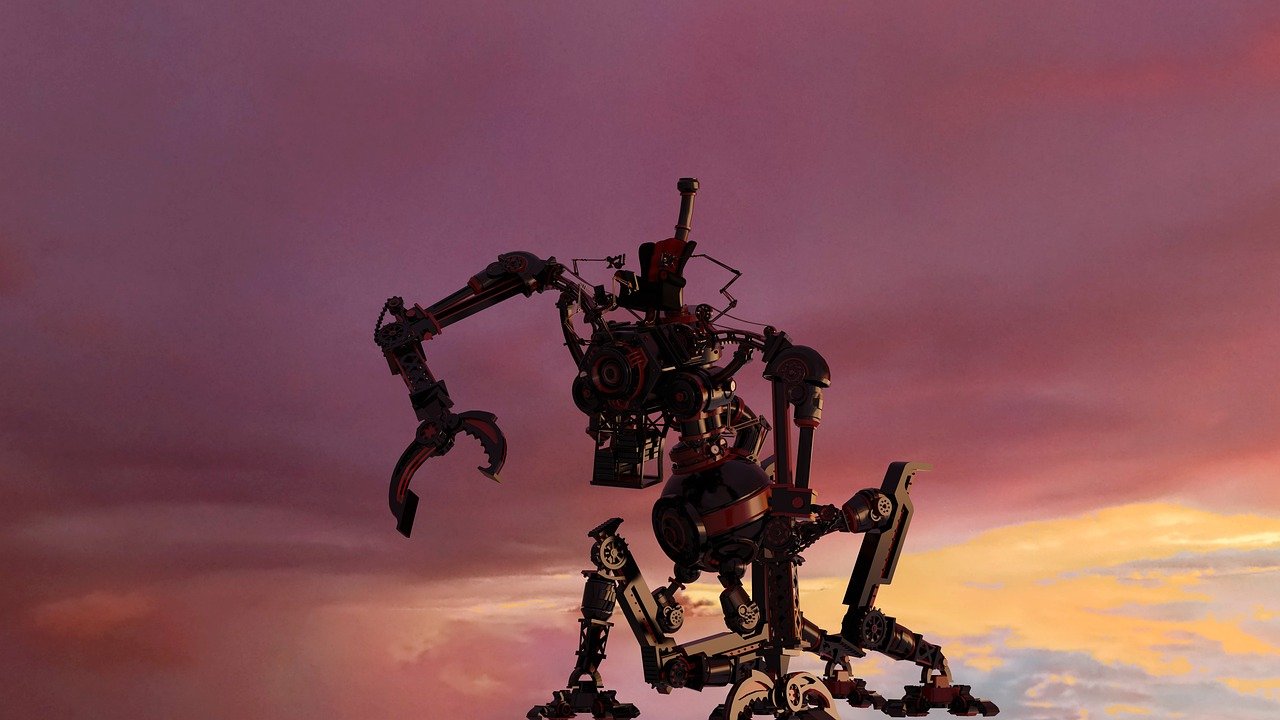
CES 2026: Where Robots Finally Learned to Walk But Still Can't Find an Outlet
The Las Vegas tech circus revealed an industry-wide pivot from virtual assistants to physical ones, with robots attempting everything from household chores to emotional support. The results ranged from impressive to 'why would anyone need this?' as companies raced to prove their AI could do more than just chat.
LAS VEGAS — After years of promising to revolutionize everything from writing emails to generating pictures of cats in space, artificial intelligence has apparently decided it's time to get off its digital ass and do something useful. Welcome to CES 2026, where 'physical AI' became the buzzword du jour, and every company from Boston Dynamics to your local smart-toaster startup suddenly realized that if AI can't physically hand you a beer, what's the point?
The annual consumer electronics extravaganza has always been a temple to technological overpromising, but this year felt different. Instead of just showing us screens that could fold in seven directions or refrigerators that tweet, the tech industry collectively decided that what humanity really needs is an army of robots that can do... well, mostly things we already know how to do, but with more Wi-Fi connectivity and subscription fees.
The annual consumer electronics extravaganza has always been a temple to technological overpromising, but this year felt different. Instead of just showing us screens that could fold in seven directions or refrigerators that tweet, the tech industry collectively decided that what humanity really needs is an army of robots that can do... well, mostly things we already know how to do, but with more Wi-Fi connectivity and subscription fees.
The Great Robot Awkwardness
Boston Dynamics' newly redesigned Atlas humanoid robot was, of course, the star of the show. The company showed off a robot that can now 'gracefully' navigate complex environments, pick up objects, and perform tasks with 'human-like dexterity.' What they didn't show was the blooper reel where Atlas probably face-planted into a wall or tried to high-five a CEO with enough force to dislocate a shoulder.
'We've moved beyond just making robots that can do backflips,' a Boston Dynamics spokesperson told me, straight-faced. 'Now they can do backflips and hand you a tool.' Progress, people. This is what progress looks like.
The Kitchen That Judges You
But the real comedy gold came from the smaller exhibits. My personal favorite: the AI-powered ice maker. Yes, you read that correctly. For just $899 (plus $14.99/month for the 'premium ice insights' subscription), this marvel of modern engineering uses machine learning to 'optimize your ice consumption patterns.'
'It learns whether you prefer cubes or crushed ice based on your drinking habits,' the enthusiastic sales rep explained, as if this were solving a problem more pressing than climate change or healthcare. 'And it can predict when you'll want a cold beverage based on your calendar, weather patterns, and biometric data from your smartwatch!'
I asked what happens if the AI gets it wrong. 'Well,' he said, looking slightly deflated, 'then you just get regular ice, I guess.' Revolutionary.
Robots in Search of a Problem
The floor was littered with solutions to problems that don't exist. There was the 'Emotional Support Robot' that follows you around and tells you positive affirmations ('Your code is beautiful today!'). There was the 'AI Gardening Assistant' that uses computer vision to identify weeds but costs more than hiring an actual gardener for a year. There was even a 'Smart Pet Rock' that uses blockchain to... actually, I stopped listening at that point.
The common thread? Every single device had 'AI' in its name, regardless of whether it actually needed intelligence. The 'AI Toothbrush' doesn't just clean your teeth—it 'analyzes your brushing technique and provides personalized feedback.' Because nothing says 'morning routine' like being scolded by your oral hygiene device.
The Subscription Apocalypse Goes Physical
Here's the real innovation nobody's talking about: the business model. Physical AI isn't just about making devices smarter—it's about making them more profitable. That robot vacuum? $799 upfront, plus $29.99/month for 'advanced navigation features.' Want it to actually recognize pet waste instead of spreading it around your living room? That's the 'Premium Avoidance Package' for an additional $9.99/month.
'We're moving toward a service model for physical devices,' one CEO told me, beaming with pride. 'Your robot butler isn't a product you own—it's a relationship you cultivate.' Translation: we've figured out how to charge you forever for something that used to be a one-time purchase.
The Uncanny Valley of Utility
The most fascinating part of CES 2026 wasn't what these robots could do—it was what they couldn't do, despite the marketing claims. The humanoid robot that can fold laundry? It takes 45 minutes to fold one shirt. The AI chef that can prepare meals? It makes exactly three dishes, all of which involve avocado toast. The robotic barista? Makes a decent latte but requires 15 minutes of calibration every morning and cries (metaphorically) when you ask for oat milk.
We're in the uncanny valley of utility: these devices are just competent enough to be impressive in demos, but just incompetent enough to be useless in real life. They're the technological equivalent of a teenager who's learned to drive but still can't do their own laundry.
The Privacy Trade-Off Nobody Asked For
Of course, all this physical intelligence comes at a cost beyond your wallet. That smart mirror that uses AI to suggest outfits based on your schedule? It's also analyzing your facial expressions, body language, and probably judging your fashion choices from 2008. The robotic nanny that watches your kids? Continuously uploading video to 'improve its child-care algorithms.'
'Your data is anonymized and aggregated,' every single privacy policy claims, which is tech-speak for 'we're definitely watching, but we pinky-promise not to tell anyone it's specifically you.'
The Future: More Robots, More Problems
So what does CES 2026 tell us about our robotic future? First, we're entering an era where everything that can be automated will be automated, whether it needs to be or not. Second, we're going to pay monthly for the privilege. And third, we're going to spend an awful lot of time troubleshooting devices that are supposed to make our lives easier.
The most telling moment came when I asked an engineer at a robotics startup what problem their $15,000 household assistant robot actually solved. He thought for a moment, then said: 'Well, it solves the problem of not having a $15,000 household assistant robot.'
Touché.






Discussion
Add a comment