
China's Chip Fund to Lead DeepSeek: State AI Takeover Begins
China's state chip fund is negotiating to lead a massive $45 billion funding round for DeepSeek, signaling a direct government takeover of AI leadership. This move threatens to reshape the competitive dynamics between Chinese and Western AI labs.
The China Integrated Circuit Industry Investment Fund, known as the 'Big Fund', is in advanced talks to lead a $45 billion valuation funding round for DeepSeek, according to the Financial Times. This would be the largest single government-directed investment in a private AI company, marking a clear escalation in Beijing's strategy to dominate frontier AI development.
- What happened: China's Big Fund is in talks to lead a funding round valuing DeepSeek at ~$45 billion, per the Financial Times.
- Why it matters: This would be the first time a state-directed investment fund takes a lead role in a private Chinese AI lab, signaling a shift from indirect subsidies to direct control.
- Key tension: DeepSeek gains guaranteed capital and chip access but loses independence and becomes a geopolitical target, while Western labs face a state-backed competitor with unlimited resources.
Why Is China's Chip Fund Suddenly Interested in DeepSeek?
According to the Financial Times, the China Integrated Circuit Industry Investment Fund, colloquially known as the "Big Fund," is in discussions to lead a fundraising round for DeepSeek at a valuation of about $45 billion. The Big Fund was originally established to boost domestic semiconductor manufacturing, not to fund AI model development. This pivot suggests Beijing views DeepSeek not merely as an AI company but as a strategic asset critical to national chip independence.
DeepSeek's breakthrough in achieving competitive performance with fewer GPUs aligns perfectly with China's goal of circumventing US export controls on advanced semiconductors. By investing directly, Beijing can ensure DeepSeek's model development is tightly coupled with domestic chip design, creating a feedback loop that accelerates both sectors.
What Does This Mean for DeepSeek's Independence?
DeepSeek has historically positioned itself as a research-driven, relatively independent entity. The Big Fund's involvement would fundamentally alter that identity. The fund's board includes representatives from the Ministry of Industry and Information Technology, meaning DeepSeek's research priorities, hiring, and even publication decisions could become subject to state oversight.
This is a double-edged sword. On one hand, DeepSeek gains access to virtually unlimited capital and guaranteed supply of domestic chips from Big Fund portfolio companies like SMIC. On the other, it becomes a prime target for US sanctions expansion. The Biden administration has already shown willingness to add entities receiving Chinese state investment to the Entity List. DeepSeek would move from a relatively obscure lab to a high-profile state proxy.
| Dimension | DeepSeek (Independent) | DeepSeek (State-Backed) |
|---|---|---|
| Funding source | Private investors, founders | State-directed Big Fund |
| Chip access | Nvidia GPUs via resellers | Domestic chips from SMIC, Huawei |
| Research freedom | Full publication autonomy | State oversight of priorities |
| Sanctions risk | Moderate | High (likely Entity List addition) |
| Geopolitical profile | Low | Very high |
| Verdict | Agile but resource-constrained | Well-funded but politically captured |
Who Benefits and Who Loses From This Deal?
The clearest winners are Chinese domestic chipmakers, particularly SMIC and Huawei's HiSilicon division. According to Bloomberg, the Big Fund's investment will likely come with conditions requiring DeepSeek to prioritize domestic chip procurement for training and inference. This creates a guaranteed customer for Chinese semiconductor firms struggling to find volume buyers for their advanced nodes.
The losers are more numerous. Western AI labs like OpenAI, Anthropic, and Google DeepMind now face a competitor with state-level resources and no profit motive—DeepSeek can afford to run models at a loss indefinitely. US export control policy also loses effectiveness: if DeepSeek is fully domestic in its chip supply, restricting Nvidia sales to China becomes moot. Finally, independent Chinese AI labs like Baidu's ERNIE team and Alibaba's Qwen group face an existential threat—they cannot compete with a state-backed rival that can subsidize compute and talent acquisition.
Is This a Bet on DeepSeek's Technology or a Geopolitical Signal?
The Financial Times reported that the Big Fund's valuation of $45 billion is roughly in line with DeepSeek's last private valuation, suggesting this is not a financial bet on future returns but a strategic allocation of state capital. The fund typically invests in hardware, not software, making this a significant departure from its mandate.
I interpret this as Beijing's acknowledgment that software—specifically, the model architectures and training techniques that reduce hardware dependency—is now the binding constraint on AI progress. The US has the best chips; China is trying to build the best models that need fewer chips. DeepSeek's Mixture-of-Experts architecture, which achieves GPT-4-class performance with 1/10th the compute, is exactly the kind of algorithmic leverage the Big Fund wants to institutionalize.
My thesis: The Big Fund's move transforms DeepSeek from a promising startup into a state instrument, accelerating China's AI progress but making the company a geopolitical target.
In the short term, DeepSeek will use the capital to scale its model training infrastructure and hire top talent from competitors. Within 12 months, expect a DeepSeek model that matches or exceeds GPT-5 on key benchmarks, specifically optimized for domestic chips. In the long term, this deal creates a single point of failure: if DeepSeek's approach falters or its models are found to have security vulnerabilities, the entire Chinese AI strategy suffers.
Who gains: SMIC, Huawei, and Chinese semiconductor tooling companies that now have a guaranteed customer. Who loses: Independent Chinese AI labs, US export control effectiveness, and any Western lab that cannot match state-level funding.
My concrete prediction: Within 18 months, the US Department of Commerce will add DeepSeek to the Entity List, blocking any US technology sales to the company, even as it pivots to domestic chips.
- By Q1 2028, DeepSeek will release a model achieving GPT-5-level performance on Chinese-language benchmarks while using only domestic chips from SMIC's N+3 process.
- Within 12 months, the US will impose secondary sanctions on any financial institution facilitating the Big Fund's investment in DeepSeek, escalating the financial war.
- By 2029, at least two major independent Chinese AI labs (Baidu ERNIE or Alibaba Qwen) will seek similar state backing or be acquired by state entities.
- May 2026FT reports Big Fund in talks to lead DeepSeek funding
China's state chip fund enters negotiations to lead a $45B valuation round for DeepSeek.
- June 2026Expected deal closure
If completed, the Big Fund becomes the largest shareholder in DeepSeek, marking state control.
- Q4 2026US sanctions response
Expected US Entity List designation for DeepSeek, blocking US technology exports.
- Q1 2028DeepSeek domestic chip model
Predicted release of a frontier model trained exclusively on SMIC chips.
Estimated DeepSeek Funding Sources Pre- and Post-Big Fund
- State capture is real: The Big Fund's investment is not a normal VC round—it's a nationalization of AI leadership under the guise of funding.
- Chip independence is the real prize: DeepSeek is a vehicle to force domestic chip adoption, not just a model company.
- Export controls lose power: If DeepSeek succeeds with domestic chips, the US loses its primary leverage over Chinese AI progress.
- Independent labs are squeezed: Chinese AI startups without state backing will struggle to compete for talent and compute.
- Geopolitical risk is now operational: Any company partnering with DeepSeek faces US sanctions risk, creating a chilling effect on global collaboration.
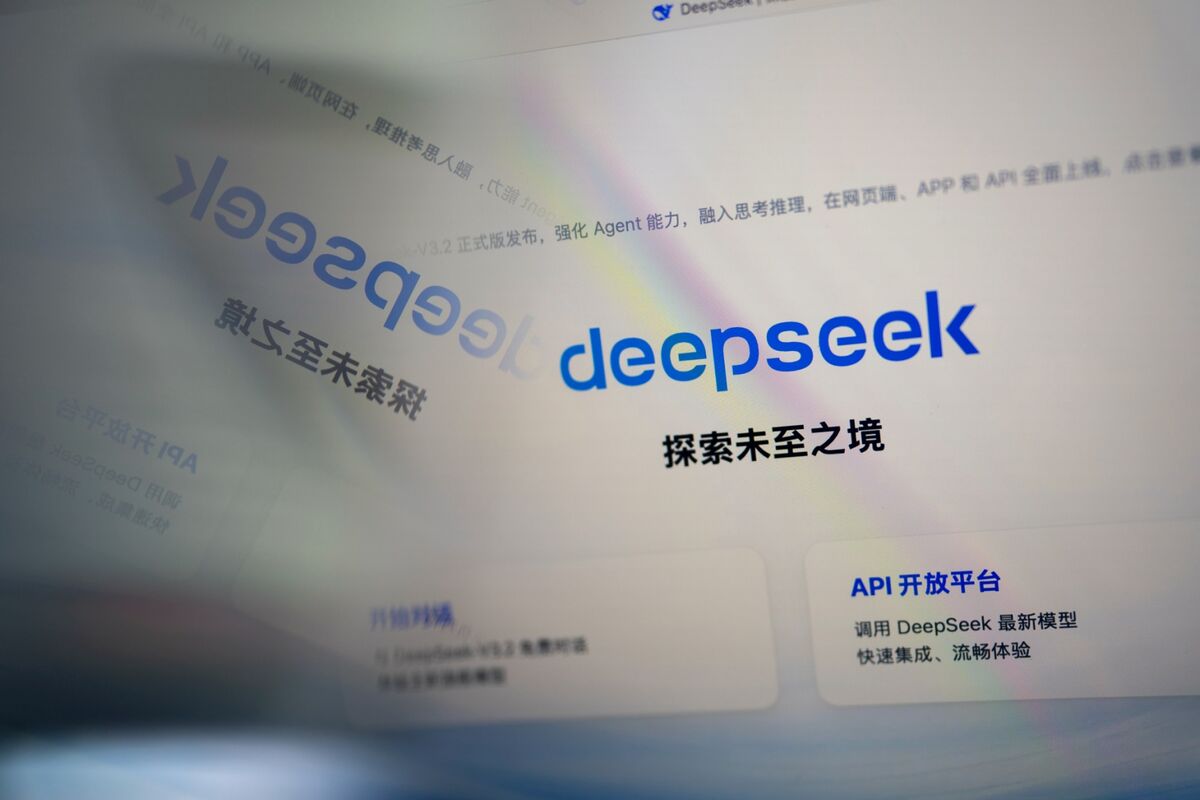
Source and attribution
Bloomberg Technology
China’s Chip Fund in Talks to Lead DeepSeek Funding, FT Says


Discussion
Add a comment