
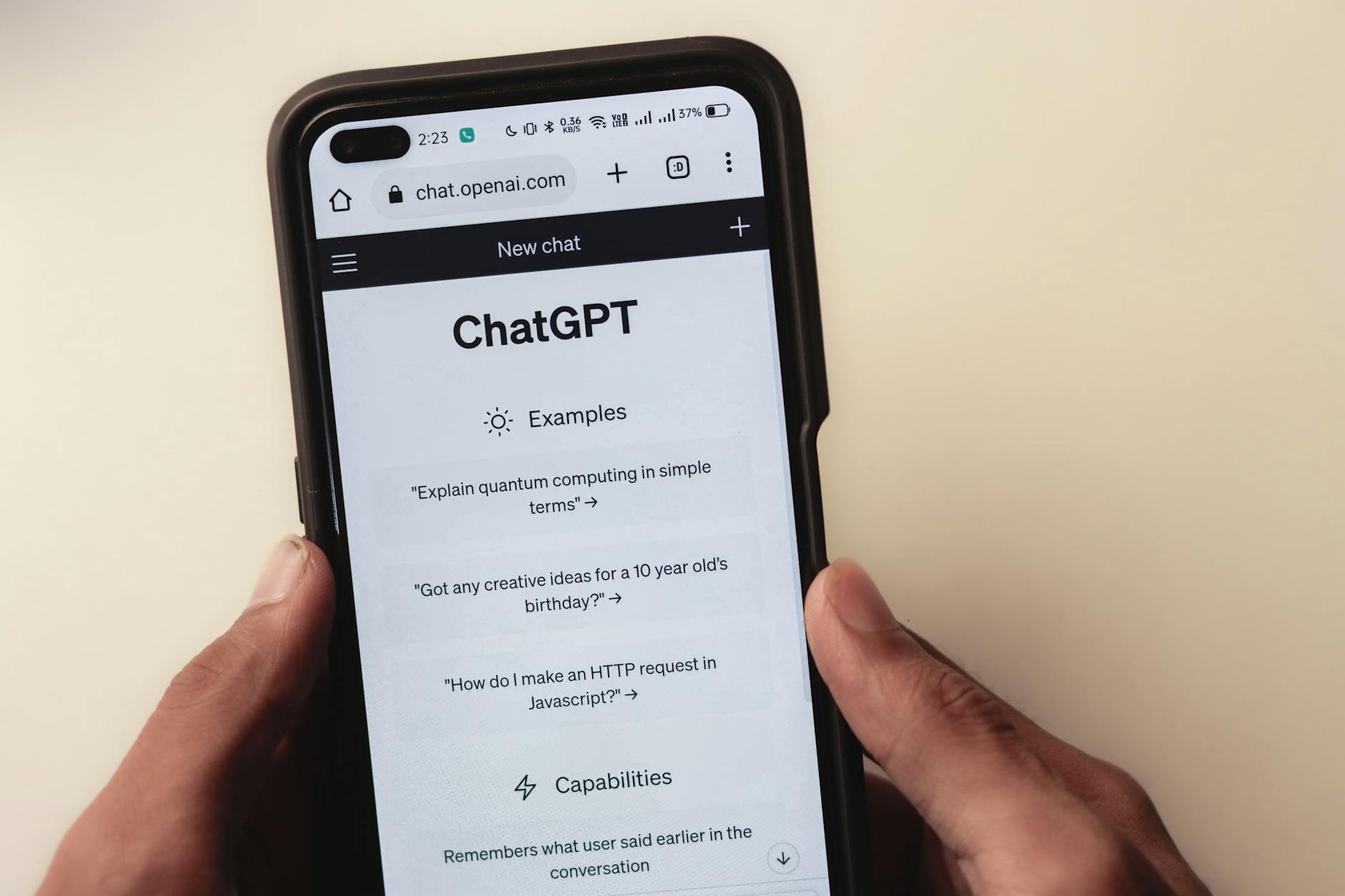
How AI's Consumption Problem Solves Its Creativity Crisis
While the world obsesses over AI's creative potential, its true transformative power lies in a surprising direction: consumption. New research reveals that AI's ability to process, analyze, and synthesize vast information streams addresses its fundamental limitation in genuine originality.
For years, the AI narrative has been dominated by a single, compelling question: Can machines create? From generating art and writing symphonies to drafting code and marketing copy, we've measured AI's progress against human creativity. This focus has led to both spectacular demonstrations and profound disappointments, revealing a fundamental truth: AI struggles with true originality. But what if we've been asking the wrong question? Emerging research suggests that AI's most transformative capability isn't creation at all—it's consumption on a scale and depth impossible for any human or traditional system.
The Creativity Mirage: Why AI Isn't What We Thought
The recent explosion of generative AI tools has created an illusion of machine creativity. Large language models produce coherent text, diffusion models generate stunning images, and multimodal systems create video from text prompts. Yet beneath this impressive output lies a process of sophisticated recombination, not creation ex nihilo. These systems are fundamentally prediction engines, trained on vast datasets to produce the most statistically likely output given a specific input.
"We've mistaken statistical likelihood for creativity," explains Dr. Elena Rodriguez, a computational linguist at Stanford's AI Lab. "When an AI writes a poem, it's not expressing an original thought or emotion. It's assembling patterns from millions of existing poems with remarkable fluency. This distinction matters because it reveals where AI's actual strengths lie."
The limitations become apparent when AI encounters truly novel problems or must generate ideas disconnected from its training data. The results range from subtly derivative to outright nonsensical. This creativity gap has real consequences for businesses investing in AI for innovation, research, and strategic planning.
The Consumption Superpower: Processing What Humans Cannot
While AI may not create like humans, it consumes information in ways humans never could. Consider these capabilities:
- Volume at Scale: An AI system can process and analyze thousands of research papers, financial reports, or legal documents in the time a human expert reads one.
- Multimodal Synthesis: Modern AI can simultaneously consume text, images, audio, video, and structured data, finding connections across formats that humans would miss.
- Temporal Analysis: AI can track information evolution over time, identifying trends, patterns, and anomalies across decades of data.
- Cross-Domain Connection: By consuming information from disparate fields—say, materials science papers and manufacturing logs—AI can identify innovative applications that specialists in either field might overlook.
This consumption capability isn't passive ingestion. Advanced AI systems actively structure, categorize, and connect information, creating knowledge graphs and semantic networks that reveal hidden relationships. They can identify contradictions across sources, track the evolution of ideas, and surface foundational assumptions that humans take for granted.
Real-World Applications: From Research to Risk Management
The implications of this consumption paradigm are already transforming industries. In pharmaceutical research, AI systems don't design new drugs from scratch—they consume millions of chemical studies, clinical trial results, and biological databases to identify promising compounds and predict potential interactions that human researchers might miss. This has accelerated drug discovery pipelines by years.
In finance, quantitative hedge funds employ AI not to create novel trading strategies, but to consume and analyze thousands of data streams simultaneously—from satellite imagery of parking lots to sentiment analysis of news articles—identifying subtle market signals invisible to human analysts.
"Our most successful AI applications aren't about generating new ideas," says Marcus Chen, CTO of a leading financial analytics firm. "They're about consuming everything that's already out there and finding the signal in the noise. The AI identifies patterns and connections, then human experts use those insights to make creative decisions."
The Human-AI Partnership: Consumption Informs Creation
The most promising applications emerge not from AI working alone, but from partnerships that leverage both human creativity and machine consumption. Consider these emerging workflows:
- Research Acceleration: AI consumes and synthesizes the existing literature on a topic, identifying knowledge gaps, contradictory findings, and emerging consensus. Human researchers use this synthesized foundation to design truly novel experiments.
- Strategic Planning: AI consumes market data, competitor intelligence, regulatory documents, and social trends to identify risks and opportunities. Human strategists use these insights to craft innovative business approaches.
- Creative Industries: Rather than generating final artwork, AI consumes visual trends, historical styles, and audience preferences to provide inspiration and constraints for human artists.
This partnership model addresses AI's creativity limitations while amplifying human capabilities. "The best outcomes come when we stop trying to make AI creative and instead use it to make humans better informed," notes Dr. Rodriguez. "An AI that has consumed every significant scientific paper published in the last decade can help a researcher ask better questions, not just provide answers."
The Future: Specialized Consumption Engines
As this paradigm gains traction, we're seeing the emergence of specialized AI systems designed not for general creativity but for deep consumption in specific domains. These systems feature:
- Domain-Specific Training: Rather than general-purpose models, we're seeing AI trained specifically to consume and understand medical literature, legal precedents, or engineering specifications.
- Verification Mechanisms: Advanced systems include built-in fact-checking, source verification, and confidence scoring for the information they consume and synthesize.
- Explanation Capabilities: The most valuable consumption AIs don't just provide answers—they explain what information they consumed to reach those conclusions, creating audit trails for human verification.
This specialization addresses one of the major concerns with current AI: the tendency to produce plausible but inaccurate information. By focusing on consumption and synthesis rather than generation, these systems can provide clearer boundaries on their knowledge and more transparent sourcing.
Ethical Implications and Guardrails
The consumption paradigm brings its own ethical considerations. Systems that consume vast amounts of information raise questions about data privacy, intellectual property, and algorithmic bias in new ways. If an AI consumes every published work in a field, who owns the synthesized insights? How do we ensure these systems don't perpetuate biases present in their training data?
Emerging best practices include:
- Transparent sourcing that allows users to trace insights back to original materials >
- Regular audits for bias and accuracy in consumed content
- Clear boundaries between consumption (analyzing existing information) and generation (creating new content)
- Human oversight for high-stakes applications
These guardrails are essential as consumption-focused AI becomes more integrated into decision-making processes across industries.
Conclusion: Rethinking AI's Role
The shift from creation to consumption represents a fundamental rethinking of AI's role in our world. Rather than competing with human creativity, AI becomes its essential partner—the ultimate research assistant, analyst, and synthesizer. This approach addresses AI's limitations while unlocking its true potential: to help humans navigate an increasingly complex information landscape.
For businesses and individuals, the practical takeaway is clear: Stop asking AI to be creative, and start asking it to consume. The most valuable applications will leverage AI's ability to process information at scale, identify patterns across domains, and synthesize complex data into actionable insights. Human creativity, informed by machine consumption, becomes more powerful than either could be alone.
As we move forward, the most successful AI implementations won't be those that generate the most impressive content, but those that help humans make better decisions by consuming and understanding everything worth knowing. In an age of information overload, that may be the most valuable superpower of all.
Source and attribution
Hacker News
AI's real superpower: consuming, not creating




Discussion
Add a comment