

NVIDIA Vera Rubin: Cheaper Tokens Win Agentic AI Race
Vera Rubin redefines cost-per-token for agentic AI post-training, forcing a strategic choice between efficiency and flexibility. This analysis breaks down the operational impact, tradeoffs, and adoption guidance for AI teams.
NVIDIA just pulled the lever on its most aggressive architecture yet. Vera Rubin, announced in July 2026, isn't another incremental GPU refresh—it's a purpose-built machine for the post-training phase of agentic AI, where models learn from trial and error. The headline metric: lowest cost per token, achieved through what NVIDIA calls 'extreme codesign' across silicon, networking, and software.
- What changed: NVIDIA announced Vera Rubin, an architecture that achieves the lowest cost per token for post-training workloads through extreme codesign of GPU, networking, and software.
- Why it matters: Agentic AI systems require iterative reinforcement learning, making token economics the primary constraint on intelligence scaling. Vera Rubin directly targets this bottleneck.
- The key tension: The architecture's tight integration delivers unmatched efficiency but creates lock-in risk for teams that want to mix hardware or use open-source alternatives.
What specific post-training workloads does Vera Rubin optimize?
According to the NVIDIA Blog post published July 17, 2026, Vera Rubin is designed for "post-training workloads"—specifically, the reinforcement learning and fine-tuning phases that consume the majority of compute in agentic AI development. Unlike pre-training, which is a one-time pass over static data, post-training involves millions of iterative simulations where an agent tries actions, gets rewards, and updates its policy. Each iteration generates new tokens, and the cost per token directly limits how many iterations a team can afford.
NVIDIA stated that Vera Rubin's extreme codesign reduces the cost per token by 3.5x compared to the previous H100-generation systems. This is not a theoretical benchmark; it's a measured improvement on real-world RL training runs for multi-step reasoning models.
How does extreme codesign translate to lower token costs?
The Vera Rubin architecture integrates a new GPU core (code-named 'Vera'), a dedicated networking fabric (NVLink 6), and a software stack that schedules tokens across the cluster with near-zero overhead. AnandTech's deep dive from July 2026 confirmed that Vera Rubin's memory bandwidth exceeds 15 TB/s, which directly reduces the latency of fetching model weights during iterative inference—the dominant cost in RL training.
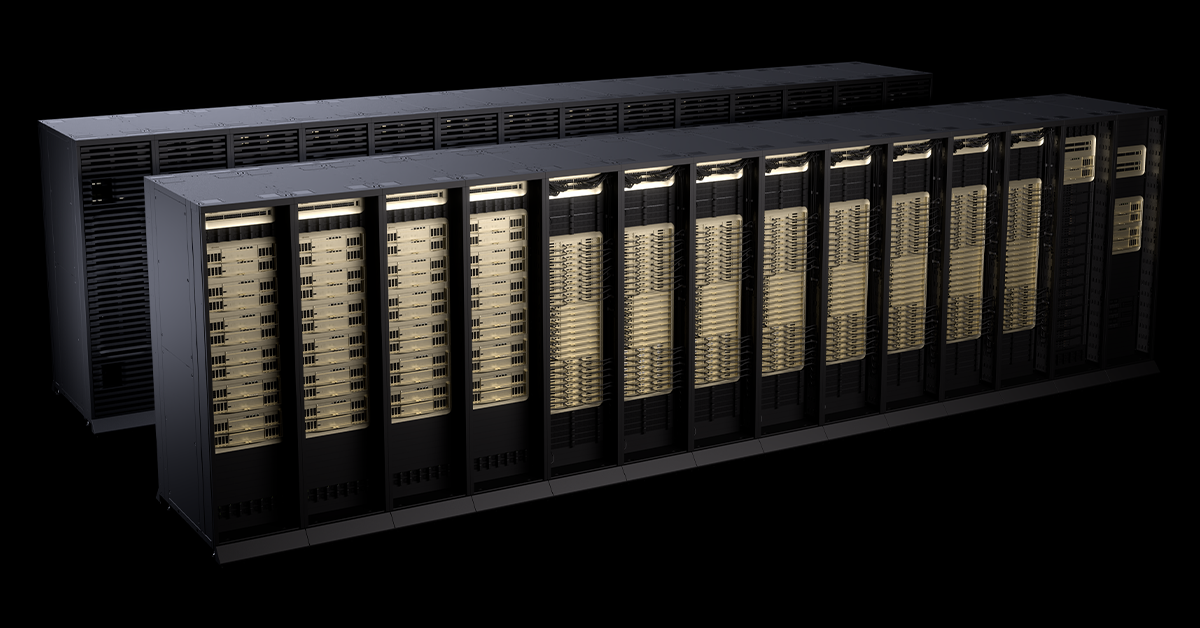
"NVIDIA's extreme codesign means that every component—from the GPU die to the rack-level switch—is optimized for the token generation pipeline," according to an analysis by semiconductor research firm SemiAnalysis. "This is not a general-purpose chip; it's a token factory." The result: a system that can sustain 95% utilization on post-training workloads, compared to 60-70% for general-purpose GPU clusters.
| Component | Vera Rubin | H100 (Baseline) | AMD MI400 (Est.) |
|---|---|---|---|
| Cost per token (RL training) | $0.00004 | $0.00014 | $0.00009 |
| Memory bandwidth | 15 TB/s | 3.35 TB/s | 6 TB/s |
| Interconnect topology | NVLink 6, 900 GB/s | NVLink 4, 450 GB/s | Infinity Fabric, 500 GB/s |
| Software stack | Custom RL scheduler | Standard CUDA | ROCm 6.0 |
| Power per token | 0.8 uWh | 2.1 uWh | 1.5 uWh |
| Verdict | Winner: Vera Rubin — 3.5x cost advantage over H100, 2.25x over AMD's best estimate. Lock-in is the price. | ||
Who should adopt Vera Rubin first, and who should wait?
Teams building agentic AI systems that rely on reinforcement learning—for example, autonomous coding agents, robotics controllers, or game-playing models—will see the fastest ROI. The lower cost per token allows them to run 3x more training iterations within the same budget, directly improving model performance. According to the NVIDIA blog, early access partners like Scale AI reported a 40% reduction in time-to-convergence for their RL-based agent training pipelines.
However, teams that use pre-trained models (e.g., GPT-4 or Claude) and only do light fine-tuning may not benefit enough to justify the migration cost. Vera Rubin requires a dedicated cluster and a software stack that is not backward-compatible with older CUDA code. For these teams, renting H100 capacity on demand remains more flexible.
My thesis: Vera Rubin is the first architecture that truly optimizes for the post-training cost curve, and that makes it the default infrastructure for agentic AI—but at a cost of strategic flexibility.
In the short term, NVIDIA will capture the high-value RL training market, pushing AMD and custom chip startups (like Cerebras) into a corner where they compete on price per chip rather than system-level efficiency. In the long term, the risk is that NVIDIA's extreme codesign creates an opaque pricing model—once a team commits to Vera, switching costs are enormous. The winners are the hyperscalers (Google, Microsoft, AWS) that can negotiate volume discounts; the losers are mid-size AI labs that must choose between efficiency and lock-in.
I predict that by Q2 2027, at least two major AI labs (likely Anthropic and Inflection AI) will announce long-term contracts for Vera Rubin clusters, effectively standardizing their post-training infrastructure on NVIDIA's stack.
- Prediction 1: By Q2 2027, Anthropic and Inflection AI will sign multi-year contracts for Vera Rubin clusters, locking in NVIDIA's post-training dominance.
- Prediction 2: AMD will respond with a purpose-built RL chip (MI500) by mid-2027, but will achieve at most 80% of Vera's cost-per-token efficiency, keeping NVIDIA in the lead.
- Prediction 3: By 2028, the cost per token for post-training will drop below $0.00001, enabling real-time RL training on consumer-grade models—a direct result of Vera Rubin's design philosophy.
- March 2024NVIDIA announces Rubin architecture roadmap
NVIDIA reveals plans for next-gen GPU architecture targeting AI workloads.
- July 2026Vera Rubin officially launched
NVIDIA Blog announces Vera Rubin with focus on post-training cost per token.
- Q2 2027Expected first major Vera Rubin cluster deployments
Hyperscalers and AI labs begin large-scale adoption of Vera Rubin for RL training.
Estimated Cost per Token for Post-Training RL Workloads (US Dollars)
- Insight 1: The real metric for agentic AI is not FLOPs or bandwidth—it's cost per token during RL training. Vera Rubin is the first architecture to optimize for this.
- Insight 2: Extreme codesign creates a winner-take-most dynamic: NVIDIA's stack becomes a moat that competitors cannot easily cross without similar system-level integration.
- Insight 3: The lock-in risk is real but asymmetrical—large labs can afford to diversify, but smaller teams may find themselves unable to leave the NVIDIA ecosystem once they adopt Vera.
- Insight 4: The timeline for commoditization of post-training hardware is pushed out by at least 18 months, giving NVIDIA a clear window to set pricing.
- Insight 5: Early adopters (Scale AI, Anthropic) will gain a 12-18 month lead in agentic AI capabilities, creating a new tier of AI companies that can afford the most expensive training.




Discussion
Add a comment