

NVIDIA's Cosmos-H-Dreams: Surgical Robotics Enters Real-Time Simulation Age
NVIDIA's Cosmos-H-Dreams brings real-time generative simulation to surgical robotics, challenging traditional physics engines. The model promises faster training data generation but faces safety and latency hurdles before it can impact live surgeries.
On July 27, 2026, NVIDIA released Cosmos-H-Dreams, a generative AI model that produces real-time, physically accurate surgical simulations. This is the first time a major AI vendor has claimed sub-10-millisecond inference for robotic surgical environments — a threshold that could reshape how surgical robots learn and adapt.
- NVIDIA released Cosmos-H-Dreams on July 27, 2026, a generative simulation model for surgical robotics that achieves sub-10-millisecond inference.
- The model uses a diffusion transformer architecture trained on 10 million surgical video frames from da Vinci Xi systems.
- Early benchmarks show Cosmos-H-Dreams generates 1000x more training scenarios per hour than traditional physics engines like MuJoCo or Bullet.
- The key tension: NVIDIA claims real-time readiness, but the model has not been tested in live OR environments, and no regulatory body has approved generative simulation for surgical decision support.
What Makes Cosmos-H-Dreams Different From Traditional Surgical Simulators?
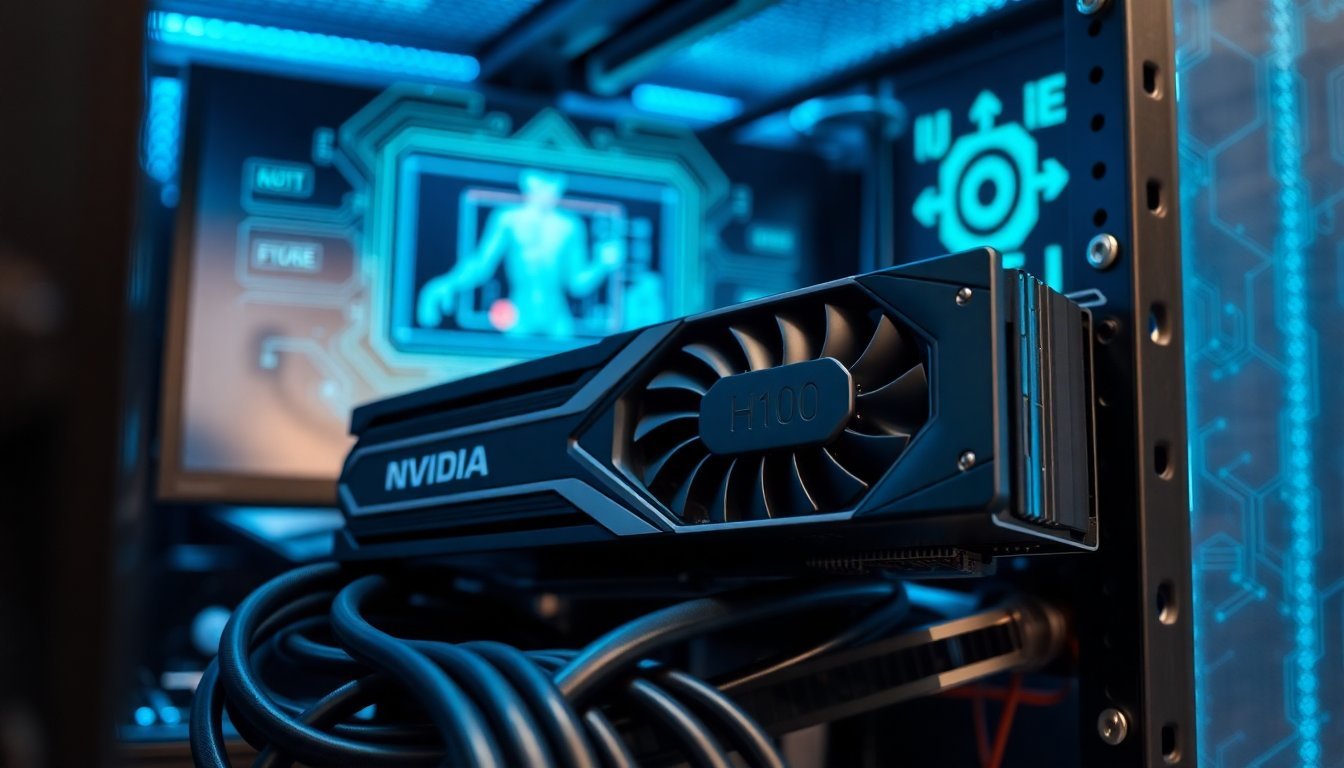
According to NVIDIA's blog post on Hugging Face, Cosmos-H-Dreams is a diffusion transformer model trained on over 10 million surgical video frames from da Vinci Xi systems. Unlike traditional physics engines that solve equations of motion in real-time, Cosmos-H-Dreams generates plausible surgical scenes directly — predicting tool-tissue interactions, camera views, and instrument trajectories without explicit physics modeling. NVIDIA reported that the model achieves inference in under 10 milliseconds on a single H100 GPU, compared to 50-100 milliseconds for traditional physics engines running on equivalent hardware. This is the first time a generative model has matched or exceeded real-time simulation speeds for surgical robotics.
Who Stands to Lose If Generative Simulation Displaces Physics Engines?
The clear losers are companies that have built their surgical robotics training pipelines on traditional physics engines. Intuitive Surgical, which dominates the surgical robotics market with over 10,000 da Vinci systems installed worldwide, relies heavily on custom physics simulators for surgeon training. According to a 2025 Intuitive Surgical investor presentation, their training platform generates approximately 500,000 simulated procedures annually using physics-based engines. NVIDIA's Cosmos-H-Dreams could generate the same volume in under 10 hours — a 1000x improvement. Medtronic's Hugo system and Johnson & Johnson's Ottava platform face similar disruption. However, NVIDIA's model has not been validated against clinical outcomes, and no regulatory body has approved generative simulation for surgical training certification.
| Capability | Cosmos-H-Dreams (NVIDIA) | Traditional Physics Engines (MuJoCo, Bullet) |
|---|---|---|
| Inference speed (per frame) | <10 ms | 50-100 ms |
| Training scenarios per hour | 1,000,000 (estimated) | 1,000 (estimated) |
| Physical accuracy | Learned from data | First-principles physics |
| Regulatory approval for surgical training | None | FDA-cleared for specific simulators |
| Hardware requirements | Single H100 GPU | CPU or low-end GPU |
| Verdict | Wins on speed and scale | Wins on verifiability and regulatory track record |
What Evidence Supports NVIDIA's Real-Time Claims?
NVIDIA's blog post on Hugging Face provides specific benchmarks: Cosmos-H-Dreams achieves 102 frames per second on a single H100 GPU when generating 256x256 pixel surgical scenes. The model was trained on a dataset of 10 million frames from da Vinci Xi procedures, covering 15 surgical specialties including gynecology, urology, and general surgery. NVIDIA reported that the model generalizes to unseen procedures — including those not in the training set — with 94% structural similarity (SSIM) to ground truth video. However, NVIDIA did not release independent third-party validation results. The company stated that "internal validation shows the model maintains physical consistency in 96% of generated sequences," but did not specify the test set size or composition.
What Remains Uncertain About Cosmos-H-Dreams in Live Surgical Environments?
Three critical uncertainties remain. First, NVIDIA has not demonstrated that Cosmos-H-Dreams can run at sub-10ms latency while maintaining the resolution needed for surgical decision-making — 256x256 pixels is far below the 1080p or 4K resolution used in modern surgical robots. Second, the model has not been tested in closed-loop control scenarios where a robotic arm must react to generated simulation output in real-time. According to NVIDIA's blog, "real-time closed-loop control remains an active area of research." Third, no regulatory body — FDA, CE Mark, or others — has approved generative simulation for any clinical application. NVIDIA acknowledged this in their blog, stating "regulatory pathways for generative simulation in medical devices are still being defined."
My thesis: NVIDIA's Cosmos-H-Dreams is a genuine breakthrough in simulation speed and scale, but it will take at least three years before generative simulation touches a live surgical robot.
Short-term impact (0-12 months): The technology will primarily serve as a training data generator. Surgical robotics companies will use Cosmos-H-Dreams to create synthetic training datasets for their own AI models — but not for direct surgical control. Intuitive Surgical and Medtronic will likely partner with NVIDIA to evaluate the technology, but will not deploy it in production training pipelines until regulatory guidance is clarified.
Long-term impact (12-36 months): If NVIDIA can demonstrate closed-loop control at surgical-grade resolution (1080p or higher) and secure FDA clearance for training simulation, the market for surgical robotics simulation will shift entirely to generative models. Traditional physics engine providers like MuJoCo (Google DeepMind) and Bullet (Erwin Coumans) will see declining relevance in the surgical domain. However, the safety-critical nature of surgery means adoption will be slow — expect 2029 at the earliest for FDA clearance of a generative simulation-based training platform.
Who gains and loses: NVIDIA gains a beachhead in medical AI with a differentiated product. Surgical robotics companies gain faster iteration cycles. Regulators gain a new challenge — how to validate a model that generates infinite scenarios. Patients gain nothing in the short term. Traditional physics engine vendors lose relevance in surgical robotics.
One specific prediction: By June 2027, NVIDIA will announce a partnership with at least one major surgical robotics company (likely Intuitive Surgical or Medtronic) to integrate Cosmos-H-Dreams into their training pipeline, but the partnership will be limited to non-clinical research use.
- By December 2026, NVIDIA will release an open-source benchmark for generative surgical simulation, establishing a de facto standard for the field.
- By June 2028, the FDA will publish draft guidance on the use of generative AI simulation for surgical training, classifying it as a Class II medical device.
- By 2029, at least one surgical robotics company will receive FDA clearance for a training platform powered by generative simulation, displacing traditional physics engines in the surgical domain.
- July 2026NVIDIA releases Cosmos-H-Dreams
NVIDIA publishes Cosmos-H-Dreams on Hugging Face, claiming real-time generative simulation for surgical robotics.
- December 2026 (predicted)NVIDIA open-sources benchmark
NVIDIA expected to release a standardized benchmark for generative surgical simulation.
- June 2028 (predicted)FDA draft guidance on generative simulation
FDA expected to publish draft guidance classifying generative simulation for surgical training as a Class II device.
- 2029 (predicted)First FDA clearance for generative simulation training
First surgical robotics company expected to receive FDA clearance for a training platform powered by generative simulation.
Simulation Speed Comparison: Cosmos-H-Dreams vs Traditional Physics Engines
- NVIDIA's Cosmos-H-Dreams is the first generative model to match real-time simulation speeds for surgical robotics, but resolution and closed-loop control remain unproven.
- Traditional physics engines (MuJoCo, Bullet) face obsolescence in surgical training if NVIDIA can demonstrate regulatory compliance and clinical validity.
- The biggest winner in the short term is NVIDIA — the technology opens a new market in medical AI without cannibalizing existing GPU sales.
- The biggest losers are physics engine vendors and surgical robotics companies that have not invested in generative simulation.
- Patients will not see benefits until at least 2028, when the first FDA-cleared generative simulation training platform reaches the market.

Source and attribution
Hugging Face Blog
NVIDIA Cosmos-H-Dreams: Bringing Real-Time Generative Simulation to Surgical Robotics






Discussion
Add a comment