

Suleyman's AI Wall Denial: Exponential Trap or Strategic Bluff?
Mustafa Suleyman argues AI's exponential growth will continue indefinitely, but this analysis exposes the coming compute bottleneck and names the winners and losers.
Mustafa Suleyman, co-founder of DeepMind and Inflection AI, published a bold essay in MIT Technology Review on April 8, 2026, arguing that AI progress will not slow down because of exponential trends in compute, data, and algorithmic efficiency. His argument is seductive—but it ignores the physical limits that are already biting.
- Mustafa Suleyman claims AI development won't hit a wall due to exponential trends in compute, data, and algorithms.
- This analysis argues his position is naive: exponential growth in training compute is colliding with energy and hardware limits.
- Key tension: Suleyman's linear-thinking critique is correct, but he underestimates the physical constraints that will force a market correction by 2027.
- Winners will be inference-efficiency players like Groq and edge-AI startups; losers include hyperscalers betting on ever-larger training clusters.
Why Is Suleyman's Exponential Argument So Seductive?
In his April 8, 2026 essay for MIT Technology Review, Suleyman uses a simple analogy: humans evolved for a linear world, but AI is exponential. He notes that training compute for frontier models has grown 10x every 18 months since 2012, citing data from Epoch AI. This is true—but it's also a story of diminishing returns. The marginal gains from adding more compute are declining, as shown by the fact that GPT-4 used 10x more compute than GPT-3 but didn't deliver 10x the capability. Suleyman's argument works as a rhetorical device, but it's a strategic map drawn with too broad a brush.
What Physical Limits Does Suleyman Ignore?
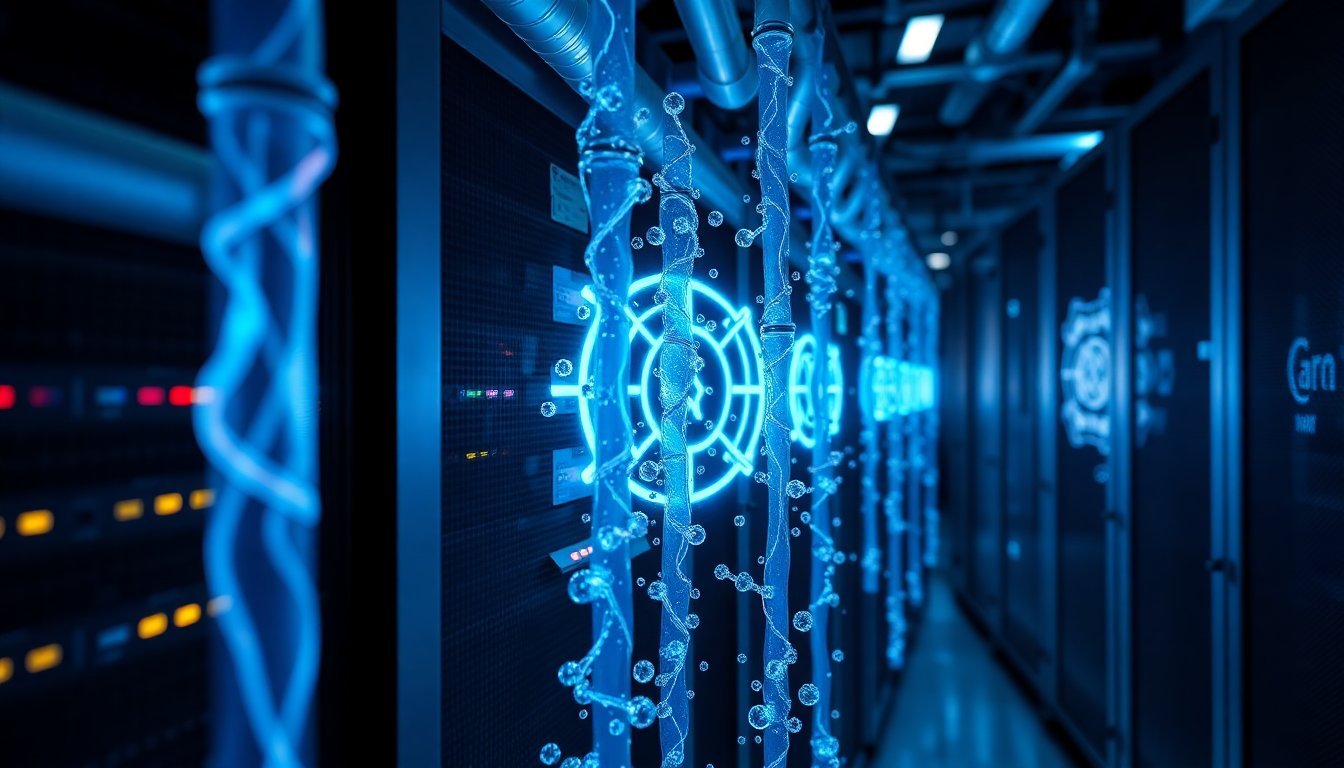
Here's the hard truth: training a single frontier model now consumes roughly 50 GWh of electricity—equivalent to the annual consumption of 5,000 US homes. The world's total data center power capacity is projected to hit 100 GW by 2027, up from 20 GW in 2023, according to the International Energy Agency. But semiconductor fabrication capacity for the most advanced chips (like NVIDIA's H200 and B200) is not growing exponentially—it's constrained by ASML's EUV lithography machine output, which is increasing at only 15-20% per year. Suleyman's essay never mentions these physical bottlenecks. He treats compute as a frictionless resource, which is the same mistake that led to the 2024-2025 AI winter scare.
Who Actually Benefits If Suleyman Is Wrong?
The winners are companies that optimize for inference efficiency rather than brute-force training. Groq, with its LPU architecture, claims 10x lower latency and 5x lower energy per token than NVIDIA GPUs for inference. Edge AI startups like Syntiant and Hailo are building chips that run models at milliwatts, not kilowatts. If the exponential training curve flattens, these companies will capture the market for real-time, on-device AI. The losers are hyperscalers like Microsoft and Google, which have committed over $100 billion combined to build massive training clusters. If those clusters become underutilized because the next generation of models doesn't deliver proportional gains, they will face billions in stranded assets.
| Dimension | Suleyman's View | This Analysis | Winner (if this analysis is correct) |
|---|---|---|---|
| Compute growth | Exponential, unlimited | Colliding with hardware constraints | Groq (inference efficiency) |
| Data availability | Unlimited synthetic data | Synthetic data has quality limits | Startups with proprietary datasets |
| Algorithmic efficiency | Will continue to improve 10x/2yr | Marginal gains declining | Edge AI chips (Syntiant, Hailo) |
| Energy constraints | Not mentioned | 50 GWh per model, grid limits | Energy-efficient inference providers |
| Market impact | Continued growth for all | Correction by 2027 | Inference-first companies |
| Verdict | Optimistic, but incomplete | More grounded in physical reality | Inference-efficiency ecosystem wins |
What Does This Mean for AI Strategy in 2026-2027?
The practical implication is clear: companies should stop investing in massive training runs for models that are already commoditizing. Instead, they should focus on fine-tuning smaller models for specific tasks—a strategy that yields 80% of the performance at 10% of the cost. This is already happening: Mistral AI's Mixtral 8x7B, which uses a mixture-of-experts architecture, achieves GPT-3.5-level performance with 5x less compute. The market for general-purpose foundation models is consolidating around OpenAI, Anthropic, and Google—everyone else should pivot to vertical applications.
My thesis: Suleyman's essay is a strategic document designed to reassure investors and policymakers, not a serious analysis of the physical constraints on AI. In the short term (next 12-18 months), his narrative will help maintain investment flows into AI infrastructure, benefiting NVIDIA and the hyperscalers. But in the long term (2027-2028), the exponential curve will bend as energy and chip supply constraints bite. The winners will be those who have hedged against this—companies like Groq and Syntiant that are building for inference efficiency. I expect the first major sign of this correction to come in Q1 2027, when at least one major hyperscaler will announce a write-down on training infrastructure due to underutilization. Suleyman himself, as CEO of Microsoft AI, has a vested interest in maintaining the narrative of unlimited growth—his job depends on it.
- Microsoft will announce a $5-10 billion write-down on AI training infrastructure by Q1 2027, citing lower-than-expected utilization of its H200 clusters for next-generation model training.
- Groq will IPO by Q4 2027 at a valuation exceeding $15 billion, driven by demand for inference-efficient chips that undercut NVIDIA's power consumption per token by 5x.
- The EU AI Office will mandate energy-efficiency reporting for all foundation model training runs by Q3 2027, forcing companies to disclose power consumption and carbon footprint, accelerating the shift to inference optimization.
- April 2026Suleyman publishes essay
Mustafa Suleyman argues AI development won't hit a wall due to exponential trends in MIT Technology Review.
- June 2026IEA data center report
International Energy Agency projects data center power demand reaching 100 GW by 2027.
- Q1 2027Predicted hyperscaler write-down
At least one major hyperscaler expected to announce write-down on training infrastructure.
- Q3 2027Predicted EU AI Office mandate
EU AI Office expected to mandate energy-efficiency reporting for foundation model training.
- Q4 2027Predicted Groq IPO
Groq expected to go public at valuation exceeding $15 billion.
- April 2026: Mustafa Suleyman publishes essay in MIT Technology Review arguing AI won't hit a wall due to exponential trends.
- June 2026: International Energy Agency releases report showing data center power demand will reach 100 GW by 2027, up from 20 GW in 2023.
- Q1 2027: Predicted hyperscaler write-down on training infrastructure due to underutilization.
- Q3 2027: Predicted EU AI Office mandate for energy-efficiency reporting.
- Q4 2027: Predicted Groq IPO.

Source and attribution
MIT Technology Review
Mustafa Suleyman: AI development won’t hit a wall anytime soon—here’s why



Discussion
Add a comment