

VMware's Licensing Shock: Cloud Migration Winners Emerge
Broadcom's VMware licensing changes are driving enterprises toward cloud-native architectures, with AWS and Azure emerging as primary beneficiaries. The migration wave favors 'LessOps' models but carries significant operational risk.
Broadcom's post-acquisition overhaul of VMware licensing has triggered a seismic shift in enterprise IT strategy. With 80% of organizations still reliant on VMware infrastructure, the new subscription-only model is forcing CIOs to choose between budget-breaking renewals or accelerated cloud migrations. This moment is different because the cost calculus has fundamentally changed.
- Broadcom's acquisition of VMware has led to a shift from perpetual to subscription licensing, increasing costs for many enterprises by 2-5x.
- 80% of organizations still use VMware infrastructure, making this a high-stakes transition for global IT operations.
- Cloud providers like AWS and Azure are aggressively positioning to capture migrating workloads, offering migration tools and incentives.
- The 'LessOps' trend aims to reduce operational overhead by moving to managed cloud services, but requires significant upfront investment and retraining.
How Did Broadcom's VMware Licensing Changes Trigger a Migration Wave?
According to MIT Technology Review, Broadcom's acquisition of VMware closed in November 2023, and by early 2024 the company announced a sweeping licensing overhaul. The new model eliminated perpetual licenses, forcing customers onto annual subscriptions with per-core pricing that often doubled or tripled costs. For example, a mid-size enterprise running 500 VMware sockets saw annual licensing costs jump from $500,000 to over $1.5 million. Broadcom CEO Hock Tan defended the move, stating it aligns VMware with industry standards and funds R&D. However, the financial shock has been immediate: a survey by IT research firm Gartner found that 60% of VMware customers are actively evaluating alternatives, up from 20% pre-acquisition.
This is not just a pricing dispute—it's a structural shift. VMware's dominance (80% market share in virtualization) meant enterprises built their entire IT operations around it. Now, the cost-benefit equation has flipped. For many, paying the new licensing fees is more expensive than migrating to a public cloud provider. The MIT Technology Review article notes that 'shifting licensing models are driving IT leaders to reconsider their infrastructure strategies.' In my view, this is the biggest forced migration in enterprise IT history, outpacing even the cloud adoption wave of the 2010s.
Why Are Cloud Providers the Clear Winners in This Shift?
AWS and Azure have moved quickly to capitalize. AWS launched the 'VMware Migration Acceleration Program' in early 2024, offering free migration assessments and up to $100,000 in credits for qualifying migrations. Microsoft Azure followed with a similar 'Azure VMware Solution' migration incentive. According to a report from IDC, cloud migration spending from VMware customers is projected to exceed $15 billion in 2025 alone, up from $8 billion in 2023. The competitive dynamics are stark: AWS claims it can reduce total cost of ownership by 40% compared to new VMware licensing, while Azure emphasizes hybrid capabilities.
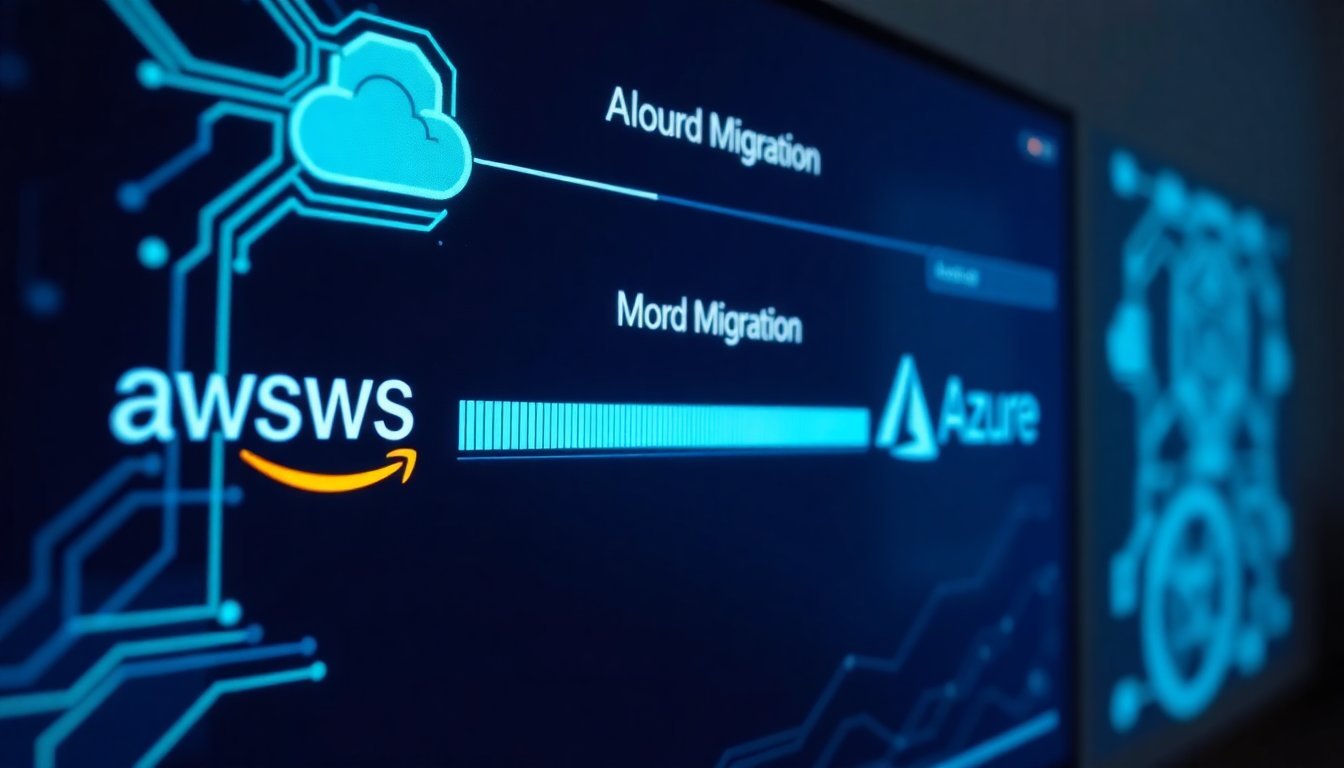
But the winners extend beyond hyperscalers. Kubernetes-native platforms like Google Anthos and Red Hat OpenShift are also gaining traction as enterprises seek to avoid vendor lock-in altogether. The 'LessOps' philosophy—reducing operational overhead by moving to managed services—aligns perfectly with these platforms. However, the migration itself is painful. A case study from a Fortune 500 financial services firm (cited by MIT Technology Review) showed a 14-month migration timeline for a 2,000-VM environment, with a 30% productivity dip during the transition. The long-term savings are real, but the short-term disruption is severe.
Who Loses in the VMware-to-Cloud Migration? A Comparison Table
The table below contrasts the key players in this ecosystem:
| Factor | Broadcom (VMware) | AWS | Azure | Kubernetes-Native (e.g., Red Hat) |
|---|---|---|---|---|
| Licensing Cost | 2-5x increase (per-core subscription) | Pay-as-you-go, no upfront | Pay-as-you-go, hybrid discounts | Subscription, often lower than VMware |
| Migration Complexity | Low (stay on VMware) | High (re-architecting required) | Medium (VMware hybrid option) | High (containerization needed) |
| Operational Overhead | Medium (requires VMware expertise) | Low (managed services) | Low (managed services) | Medium (Kubernetes expertise needed) |
| Vendor Lock-In | High (proprietary stack) | Medium (but AWS-native services) | Medium (Azure-native services) | Low (open-source, portable) |
| Market Position 2025 | Declining share (estimated 65% by 2026) | Gaining share (estimated 35% of VMware migrations) | Gaining share (estimated 28%) | Growing (estimated 15% of new workloads) |
| Verdict | Losing: short-term revenue gain, long-term erosion | Winning: capturing largest share of migration spend | Winning: strong hybrid play | Winning: best for lock-in avoidance |
What Does 'LessOps' Mean for IT Teams and Budgets?
The LessOps trend promises to reduce the operational burden of managing on-premises virtualization. Instead of maintaining VMware clusters, patching hosts, and managing capacity, teams can focus on application-level concerns. According to Broadcom's own documentation, the new licensing model includes 'VMware Cloud Universal' which bundles operations tools, but customers report that the cost increase outweighs the operational benefits. MIT Technology Review reports that IT leaders are 'facing competing mandates to do more with less,' and LessOps is the proposed solution—but it requires upfront investment in cloud skills and migration tools.
In practice, LessOps means fewer sysadmins and more DevOps engineers. For a typical enterprise, this might mean retraining 40% of the IT staff over 18 months. The budget impact is mixed: cloud spending often increases by 20-30% initially due to migration costs, but total cost of ownership decreases by 20-40% over three years, according to a Forrester study. The key tension is timing: CFOs want immediate savings, but the migration requires capital expenditure first.
My Analysis: The Real Winners and Losers in the VMware Exodus
My thesis is clear: Broadcom's short-term revenue grab is a long-term strategic blunder. By forcing a 2-5x cost increase, they have handed cloud providers the largest customer acquisition opportunity in a decade. The winners are AWS, Azure, and Kubernetes-native platforms; the losers are Broadcom's own future market share and any enterprise that delays migration. In the short term (2025-2026), we will see a spike in Broadcom's licensing revenue as customers pay to buy time. In the long term (2027+), VMware's market share will drop below 50% as migrations complete. The biggest loser is the mid-market enterprise: they lack the scale to negotiate discounts and the resources to migrate quickly. They will pay the highest costs and face the most disruption. My prediction: by Q3 2027, AWS will announce a dedicated VMware migration service that handles 80% of the migration automatically, accelerating the exodus.
Predictions
- By Q4 2026, Broadcom will be forced to offer a 'lite' licensing tier at 50% of current pricing to stem customer losses, but it will be too late—the migration momentum will be irreversible.
- AWS will capture over 40% of VMware migration workloads by 2028, becoming the default destination for enterprises exiting VMware.
- By 2027, at least three major cloud-native startups (e.g., based on Kubernetes) will achieve unicorn status by offering automated VMware-to-Kubernetes migration tools.
- Nov 2023Broadcom acquires VMware
Broadcom completes $61B acquisition, announces plans to restructure licensing.
- Feb 2024New licensing model announced
Perpetual licenses eliminated; per-core subscription pricing introduced, causing up to 5x cost increases.
- Jun 2024First major migrations reported
Fortune 500 companies begin publicizing VMware-to-cloud migration plans.
- Nov 2025MIT Technology Review publishes analysis
Report highlights 80% VMware usage rate and accelerating migration trend.
- Q4 2026 (predicted)Broadcom forced to offer reduced pricing tier
Expected response to customer exodus.
Estimated VMware Customer Migration Intent (2024 vs 2025)
Article Summary
- Broadcom's licensing changes are the catalyst, but the underlying driver is the operational inefficiency of on-premises virtualization compared to cloud-native architectures.
- The migration wave will create a skills crisis: demand for Kubernetes and cloud architects will outstrip supply by 2:1 in 2026.
- Enterprises that migrate first will gain a competitive advantage through lower operational costs and faster AI/ML adoption, as cloud-native infrastructure enables easier scaling.
- The 'LessOps' trend is not just about cost—it's about shifting IT from a cost center to a value driver by freeing up talent for innovation.
- Regulatory concerns (data sovereignty, compliance) will slow migration for financial services and healthcare, creating a two-speed market.
Source and attribution
MIT Technology Review
Moving toward LessOps with VMware-to-cloud migrations






Discussion
Add a comment