
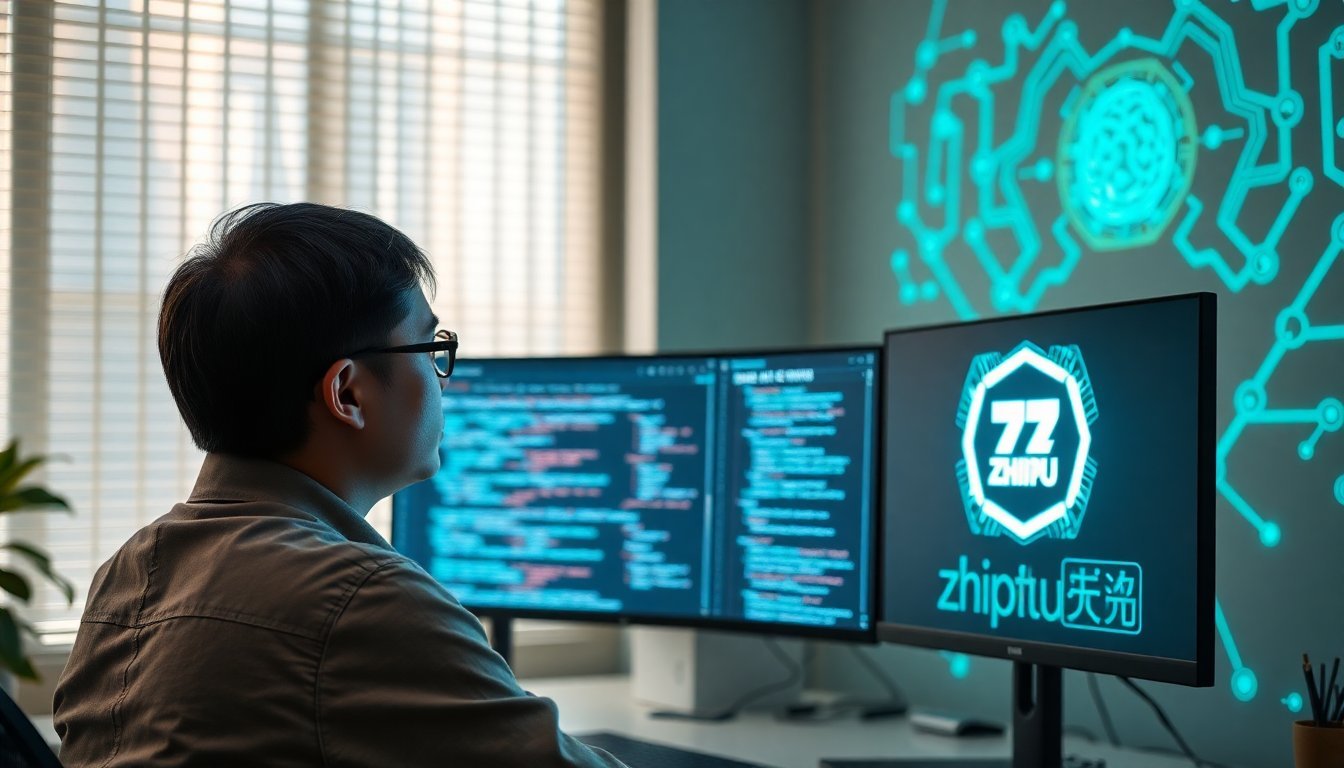
Zhipu's Open AI Gambit: China's Play for Frontier Dominance
Zhipu's founder argues for open frontier AI, challenging Western closed-model approaches. This move positions China as a champion of AI accessibility while potentially reshaping global AI governance.
On July 12, 2026, Tang Xiao, founder of Chinese AI lab Zhipu, publicly declared that frontier AI should remain accessible to all, not controlled by a select few. This statement, reported by Bloomberg Technology, directly challenges the prevailing Western narrative that powerful AI models must be locked down to prevent misuse.
- Zhipu founder Tang Xiao argued for open frontier AI, directly opposing Western calls for strict controls.
- The debate pits open-source advocates like Zhipu against closed-model leaders like OpenAI and Anthropic.
- This is a strategic play by China to set global AI standards and attract talent and investment.
Why Is Zhipu Pushing for Open Frontier AI Now?
According to Bloomberg Technology, Tang Xiao stated that "frontier AI should remain broadly accessible rather than controlled by select individuals." This is not a neutral statement—it is a direct counter to the growing consensus in Silicon Valley and Washington that frontier models pose existential risks and require strict oversight. Zhipu's timing is deliberate: the company recently raised $300 million in a Series B round, as reported by Reuters on June 15, 2026, valuing it at over $2 billion. With this capital, Zhipu is positioning itself as a major player in the global AI race, and its open-source stance is a key differentiator.
Zhipu's argument is that openness fosters innovation and democratizes access to AI, preventing a small group of companies from controlling the future of intelligence. This narrative resonates in developing countries and among researchers who fear a new form of digital colonialism. By championing openness, Zhipu gains moral high ground and potential market share in regions wary of US tech dominance.
How Does Zhipu's Position Differ From Western AI Labs?

The contrast is stark. OpenAI, once a champion of open-source, has become increasingly closed, citing safety concerns. Anthropic has built its entire brand on "responsible AI" with strict usage policies. According to a recent report by the Financial Times, both companies have lobbied for government regulation that would effectively lock down frontier capabilities. Zhipu's stance flips this narrative: it argues that the real risk is not too much access, but too little.
However, Zhipu is not purely altruistic. Its open models, such as GLM-130B, are competitive but not yet at the level of GPT-4 or Claude 3. By advocating for openness, Zhipu can access a global developer ecosystem and accelerate its own progress through community contributions. This is a classic "fast follower" strategy: let the leaders pay for safety research, then adopt the best ideas.
| Aspect | Zhipu (Open) | OpenAI/Anthropic (Closed) |
|---|---|---|
| Model Access | Public weights and code | API-only or limited access |
| Safety Philosophy | Safety through transparency | Safety through control |
| Business Model | Cloud services + open-source ecosystem | Subscription fees + API revenue |
| Regulatory Stance | Light-touch, global standards | Strict, government-led oversight |
| Key Risk | Misuse of open models | Centralized control and stagnation |
| Verdict | Wins on accessibility and global appeal | Wins on safety and control |
What Does This Mean for the Global AI Governance Debate?
Tang Xiao's comments inject a new dimension into the ongoing debate at forums like the UN AI Summit and the G7. Western regulators have largely coalesced around a risk-based framework that requires companies to assess and mitigate harms before deployment. Zhipu's alternative—that openness itself is a safeguard—will find allies in countries like India and Brazil, which fear being locked out of the AI revolution.
According to a policy paper from the Center for AI Safety, open models pose risks of dual use, but they also enable independent audits and democratic oversight. Zhipu is effectively arguing that the benefits outweigh the risks, and that any attempt to restrict access is a power grab. This framing will likely influence the next round of AI governance negotiations, potentially leading to a fragmented global regime where different regions adopt different standards.
Who Gains and Who Loses From Zhipu's Open AI Push?
Zhipu itself is the biggest winner: it gains attention, developer loyalty, and a unique selling proposition. Other Chinese AI labs, such as Baidu and Alibaba, may also benefit if they adopt similar stances, creating a bloc of open-source AI from China. Western open-source projects like Meta's LLaMA (now open-source) and Hugging Face also stand to gain, as Zhipu's advocacy normalizes their approach.
Losers include closed-model companies like OpenAI and Anthropic, which now face a powerful counter-narrative that could erode their moral authority and market share. Additionally, Western policymakers who favor strict regulation may find their efforts undermined by a competing model that promises innovation and access. Finally, users in developing countries win, as they gain access to frontier-level AI without paying Western prices.
My thesis: Zhipu's open AI advocacy is a calculated strategic move that will reshape the global AI landscape, but it carries risks that the company is downplaying.
In the short term, Zhipu will attract a wave of developers and researchers to its platform, accelerating its model improvements. In the long term, the success of this strategy depends on whether open models can be made safe enough to avoid catastrophic misuse. If a major incident occurs involving an open Chinese model, the backlash could be severe, potentially leading to export controls or sanctions.
I believe the biggest gainer is the global open-source community, which now has a powerful patron in China. The biggest loser is the Western narrative that safety requires centralization. My concrete prediction: within 12 months, at least one major Western AI lab will announce a partial open-sourcing of a frontier model in response to competitive pressure from Zhipu.
Predictions
- Meta will accelerate its open-source strategy, releasing a Llama 4 model with weights publicly available by Q1 2027, directly competing with Zhipu's GLM series.
- The EU AI Office will propose a tiered regulatory framework by mid-2027 that exempts open-source models from certain requirements, citing innovation benefits.
- Zhipu will announce a strategic partnership with a major Indian or Brazilian cloud provider by December 2026 to distribute its open models in those markets.
- June 2026Zhipu raises $300M Series B
Reuters reports Zhipu AI raises $300 million, valuing it at over $2 billion.
- July 2026Tang Xiao advocates for open AI
Bloomberg reports Zhipu founder argues frontier AI should be accessible to all.
- Zhipu's open AI stance is a strategic differentiator, not just a philosophical position.
- This will fragment global AI governance between open and closed camps.
- Western labs face pressure to justify closed models or risk losing market share.
- Developing countries are the immediate beneficiaries of Zhipu's approach.
- The safety debate is now a geopolitical one, with China as a key player.
Source and attribution
Bloomberg Technology
Zhipu’s Chinese Founder Says Frontier AI Should Stay Open to All





Discussion
Add a comment