

🔥 The 'Bad Connection' Meme Format
Turn any frustrating tech or travel situation into a viral meme with this simple template.
His scheme was terrifyingly simple: he created fake networks that mimicked legitimate ones, silently harvesting the data of anyone who connected. This begs the urgent question—how can you tell if the WiFi network you're about to use is real, or a hacker's snare?
Well, there goes my plan to finally get some work done on that cross-country flight. Just when you thought the only thing you had to worry about at 30,000 feet was a crying baby or a middle seat, a 44-year-old man in Australia has been sentenced to seven years in prison for a truly devious WiFi scheme. His crime? Setting up fake airport and in-flight networks to suck up the personal data of unsuspecting travelers. Talk about a bad connection.
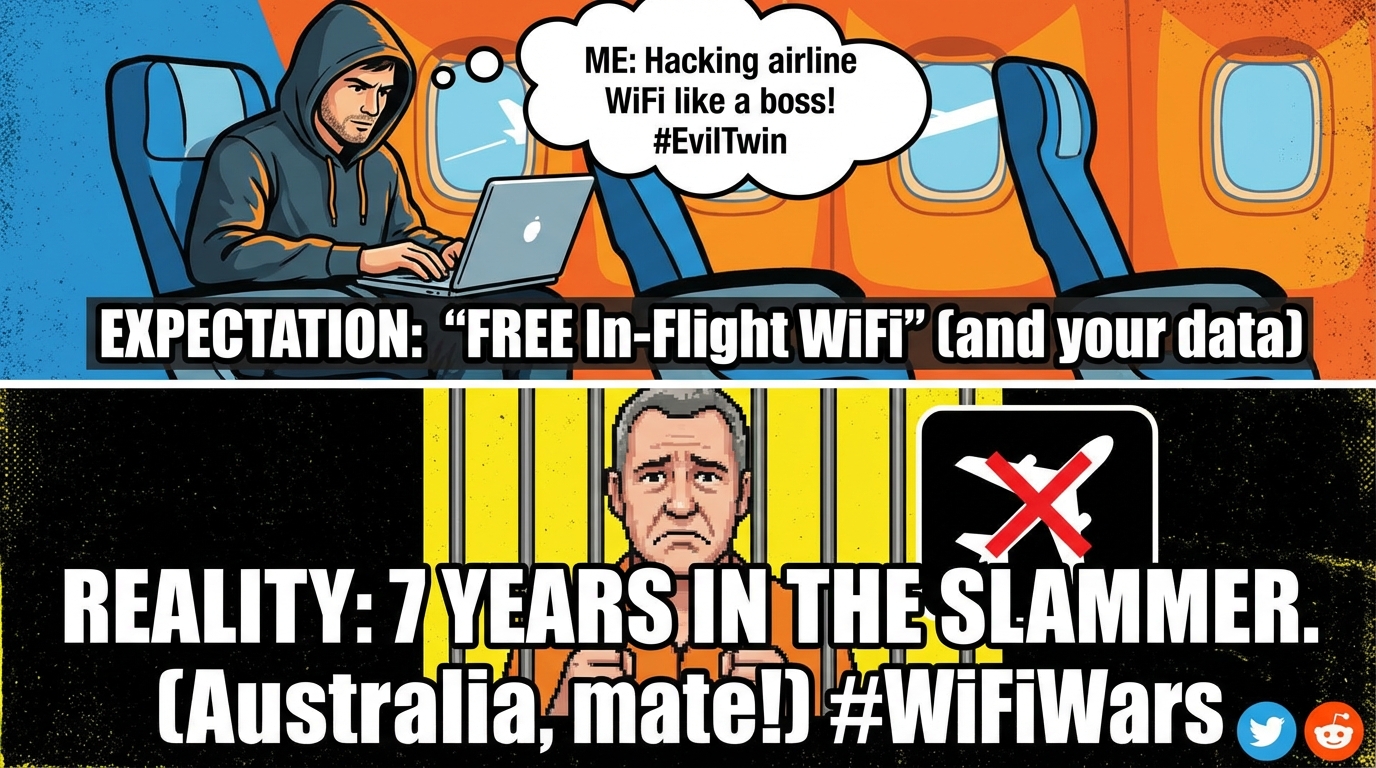
Authorities say this guy was running what’s called an “Evil Twin” attack. He’d create a WiFi hotspot with a name that looked legit, like “Qantas Free WiFi” or something similar at an airport lounge. Travelers, desperate to check emails or post that cloud selfie, would connect without a second thought. Once they did, he could intercept their login details, credit card info, and basically any data they sent out into the digital void. He was basically a digital pickpocket, but with a laptop instead of nimble fingers.
The funny part is the sheer audacity of the hustle. This wasn't some complex, behind-seven-proxies hack. This was the digital equivalent of putting up a fake “Free Donuts” sign outside a police station and then frisking people as they walked in. You have to admire the entrepreneurial spirit, if not the criminal intent. He saw a captive audience—literally—and decided to exploit the one thing we all crave mid-journey: a sliver of internet to tell everyone we’re on a plane.
It’s also a perfect, if terrifying, reminder of our own habits. We’ve all been that person, frantically clicking on any network that doesn’t have a lock icon next to it. Our brains in travel mode are basically screaming “CONNECT NOW, THINK LATER.” This guy’s entire business model was built on that universal moment of weakness. He wasn’t hacking supercomputers; he was preying on our need to post “Wheels up!” on Instagram.
So the next time you’re about to join that suspiciously convenient “Starbucks Free WiFi” at the gate, maybe just… don’t. Use your phone’s data, or embrace the brief, beautiful offline silence. Because as this would-be WiFi warlord found out, the only thing you should be catching on a flight is a nap, not a federal case. His evil twin got a twin bed… in a prison cell.
Quick Summary
- What: A man was sentenced to seven years for creating fake airport and in-flight WiFi networks to steal personal data.
- Impact: This highlights serious cybersecurity risks in public networks, even during air travel.
- For You: You'll learn how to identify and avoid unsafe public WiFi connections.


💬 Discussion
Add a Comment