

🔥 Airplane WiFi Scam Meme Format
Use this viral template to create relatable content about modern digital dangers.
So how can a simple WiFi connection turn your flight into a security nightmare? The terrifying truth is that the most dangerous part of your journey might not be turbulence, but the network you trust to pass the time.
Imagine settling into your airplane seat, ready to enjoy some sweet, overpriced in-flight WiFi to distract you from the crying baby three rows back. You connect to "Qantas Free WiFi" or "Virgin Guest," thinking you're about to scroll in peace. Little did you know, the friendly-looking guy in 12C might have been running a digital fishing expedition, and he just got a whopping seven-year timeout in federal prison.
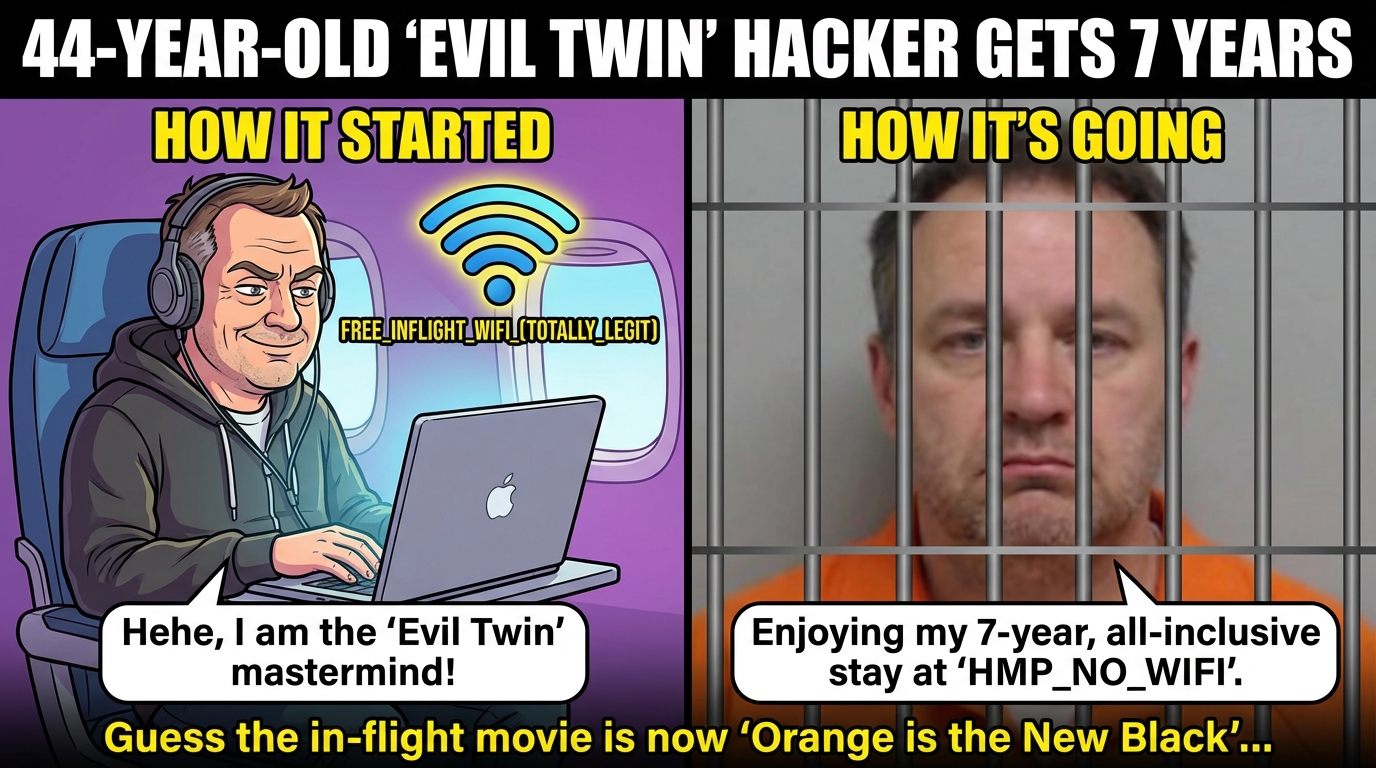
Meet the 44-year-old man recently sentenced for operating "Evil Twin" attacks on Australian flights and airports. His scheme was deviously simple: he'd set up a rogue WiFi hotspot with a name identical to the legitimate airline or airport network. When travelers connected to his fake hotspot, he could intercept their data—passwords, credit card info, you name it. It's the digital equivalent of someone setting up a fake ticket booth outside a concert and charging you to see a mime in a parking lot.
The funny part is the sheer audacity of the crime scene. Airplanes are already pressure cookers of mild chaos, with people fighting for armrests and the last bag of pretzels. Adding "digital bandit" to the list of in-flight annoyances feels like a weird escalation. This guy wasn't just stealing legroom; he was trying to steal identities at 30,000 feet. You have to wonder about his workflow. Did he have a special "evil hacker" laptop tray? Did he excuse himself to the lavatory to cackle maniacally?
It also gives a whole new meaning to the phrase "bad connection." We've all grumbled about slow plane WiFi, but this takes it to another level. Your streaming might buffer, but at least your bank account wasn't being drained by a cybercriminal in the same cabin. The Reddit discussion on this, with over 600 upvotes, was likely a mix of horror and people suddenly remembering that one weird login prompt they saw last flight.
So next time you're about to connect to free WiFi, maybe just stick to the in-flight magazine crossword. It's slower, but the only thing it'll steal is your will to live after you can't get 17-Across. This sentencing is a solid reminder that if a WiFi deal seems too good to be true—especially while trapped in a metal tube—it probably is. Safe travels, and maybe just download your movies before you fly.
Quick Summary
- What: A hacker stole data using fake airline WiFi networks and received a seven-year prison sentence.
- Impact: This case highlights the real danger of public WiFi and the legal consequences of hacking.
- For You: You'll learn how to identify and avoid dangerous fake public WiFi networks.


💬 Discussion
Add a Comment